Home | About Us | Advantages | Blogs | Contact Us
| Availability: | |
|---|---|
| Quantity: | |
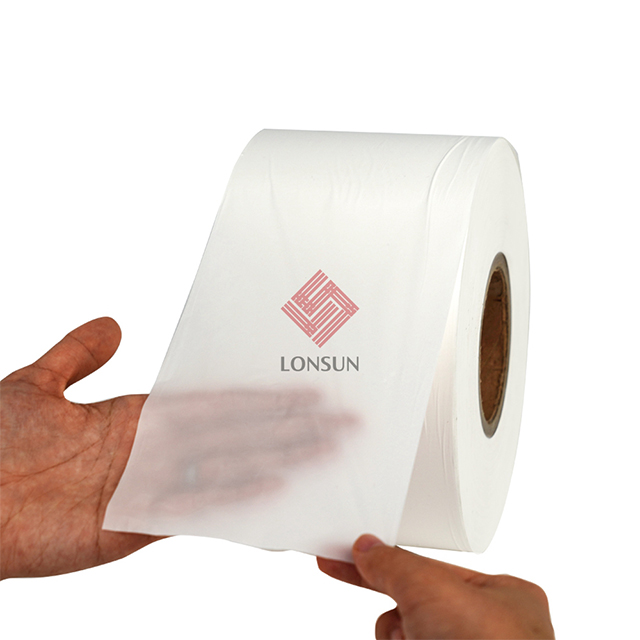
PE Film For Baby Diaper
Item | PE Film | ||||||||
Material | PE | ||||||||
Feature | Moisture Proof | ||||||||
Diameter | 400-600mm | ||||||||
Hardness | Soft | ||||||||
The bottom material of diapers is generally made of PE film or PE film + non-woven fabric, PE film has good water insulation and air permeability, mainly to prevent urine leakage, so that the diaper is breathable and impermeable. Non-woven fabrics ensure the breathability of diapers while improving the comfort of baby use as much as possible, so that diapers have more texture and feel better.
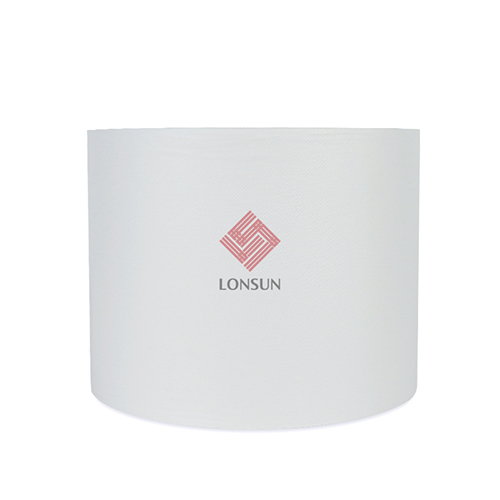
Diaper backsheet PE film is a polyethylene-based film used as the outermost layer of diapers, serving as a waterproof barrier that prevents liquid leakage while allowing breathability to enhance comfort. It is also called the plastic bottom sheet or fluid-impermeable bottom cover sheet in diapers.
Material: Made from polyethylene (PE), sometimes combined with nonwoven fabrics like polypropylene (PP) to create a clothlike laminate that is soft and flexible.
Waterproof and Breathable: The film is waterproof to prevent leaks but can be made breathable by adding mineral fillers (e.g., calcium carbonate) and stretching the film to create micropores. This breathability allows air to pass through while blocking moisture, helping keep the baby's skin dry and comfortable.
Softness and Comfort: The film is designed to be soft and comfortable, often micro or macro embossed to reduce noise, increase elasticity, and improve softness. The lamination with nonwoven fabric further enhances the clothlike feel.
Manufacturing Types: There are two main film production methods:
Blown film (common in Europe) offers good strength and puncture resistance but is harder and noisier.
Cast film (common in the U.S.) is softer, quieter, and more transparent but less tear-resistant.
Function: Besides leak protection, the backsheet film contributes to the diaper’s overall softness, strength, and breathability, improving skin wellness and wearer comfort.
Used primarily in baby diapers but also in adult diapers, sanitary napkins, and other absorbent hygiene products where moisture control and comfort are essential.
In summary, diaper backsheet PE film is a specialized polyethylene film that acts as a waterproof, breathable, and soft outer layer of diapers, often combined with nonwoven fabrics to enhance comfort and performance.


PE Film For Baby Diaper
Item | PE Film | ||||||||
Material | PE | ||||||||
Feature | Moisture Proof | ||||||||
Diameter | 400-600mm | ||||||||
Hardness | Soft | ||||||||
The bottom material of diapers is generally made of PE film or PE film + non-woven fabric, PE film has good water insulation and air permeability, mainly to prevent urine leakage, so that the diaper is breathable and impermeable. Non-woven fabrics ensure the breathability of diapers while improving the comfort of baby use as much as possible, so that diapers have more texture and feel better.
Diaper backsheet PE film is a polyethylene-based film used as the outermost layer of diapers, serving as a waterproof barrier that prevents liquid leakage while allowing breathability to enhance comfort. It is also called the plastic bottom sheet or fluid-impermeable bottom cover sheet in diapers.

Material: Made from polyethylene (PE), sometimes combined with nonwoven fabrics like polypropylene (PP) to create a clothlike laminate that is soft and flexible.
Waterproof and Breathable: The film is waterproof to prevent leaks but can be made breathable by adding mineral fillers (e.g., calcium carbonate) and stretching the film to create micropores. This breathability allows air to pass through while blocking moisture, helping keep the baby's skin dry and comfortable.
Softness and Comfort: The film is designed to be soft and comfortable, often micro or macro embossed to reduce noise, increase elasticity, and improve softness. The lamination with nonwoven fabric further enhances the clothlike feel.
Manufacturing Types: There are two main film production methods:
Blown film (common in Europe) offers good strength and puncture resistance but is harder and noisier.
Cast film (common in the U.S.) is softer, quieter, and more transparent but less tear-resistant.
Function: Besides leak protection, the backsheet film contributes to the diaper’s overall softness, strength, and breathability, improving skin wellness and wearer comfort.
Used primarily in baby diapers but also in adult diapers, sanitary napkins, and other absorbent hygiene products where moisture control and comfort are essential.
In summary, diaper backsheet PE film is a specialized polyethylene film that acts as a waterproof, breathable, and soft outer layer of diapers, often combined with nonwoven fabrics to enhance comfort and performance.


1. IntroductionHave you ever wondered how modern women stay fresh and comfortable every day? Panty shields play a key role in daily feminine hygiene. These discreet, absorbent products help manage light discharge and leaks.In this article, we will explore what a panty shield is, its purpose,
IntroductionHave you ever wondered what goes into the making of a feminine pad? It's a product many of us use regularly, but we rarely think about its raw materials. In this article, we will dive into the Feminine Pad Raw Materials, exploring what materials are used, how they function,
1. IntroductionSanitary towels are a vital part of daily hygiene, yet many people don't know what they're made of. Have you ever wondered about the materials inside your sanitary towels?
IntroductionSanitary pads are an essential part of personal hygiene, but have you ever wondered how they stay so comfortable and dry? A key factor is the PE backsheet.In this article, we will explore the significance of breathable PE backsheets and how they enhance comfort and skin health.
The hygiene product material industry is transforming rapidly. As consumer health awareness grows, so does the demand for sustainable and innovative materials. In 2025, companies are embracing new technologies to meet environmental and performance standards.In this article,
Executive Summary Market Overview Product Trends Competitive Landscape Consumer Behavior Distribution Channels Regional Analysis Market OutlookA comprehensive analysis of the €26 billion European diaper market, exploring sustainable innovation, demographic shifts, and technologi
This article delves into the crucial role of the Acquisition Distribution Layer (ADL) in disposable hygiene products. Positioned between the topsheet and the absorbent core, ADL swiftly absorbs and disperses liquids to maintain a dry and comfortable surface. It covers common materials (e.g., nonwoven fabrics, synthetic fibers), multi-layer structure designs, functional principles (including rapid diversion and liquid distribution), and performance evaluation methods (such as absorption rate, diversion volume, and reverse permeability). The piece also highlights environmental considerations, like biodegradable materials and recycling solutions. Additionally, it discusses ADL applications in specific products like diapers and sanitary napkins and looks ahead to future technological advancements, asserting that ongoing improvements in ADL technology will enhance the disposable hygiene products industry, better meeting consumer demands for hygiene, health, and environmental protection.
The main raw materials used in sanitary pads include a top layer (non-woven fabric or perforated film for skin contact and quick liquid absorption), an absorbent core (fluff pulp and superabsorbent polymer (SAP) to retain menstrual fluid), a back layer (PE or breathable film to prevent leakage), an adhesive (to secure the pad to underwear), and release paper (to protect the adhesive). Some products may also contain fragrances, antibacterial agents, or use organic cotton and other natural materials to meet different needs.