Home
Home | About Us | Advantages | Blogs | Contact Us


- All
- Product Name
- Product Keyword
- Product Model
- Product Summary
- Product Description
- Multi Field Search
Views: 0 Author: Site Editor Publish Time: 2026-02-27 Origin: Site


The global disposable hygiene industry is being reshaped by strict regulatory overhauls, shifting raw material costs, and growing demand for sustainable, transparent supply chains. For manufacturers of diapers and sanitary pads, securing compliant, cost-effective core materials—fluff pulp, super-absorbent polymer (SAP), nonwovens, and polyolefins—is critical to market access and profitability.
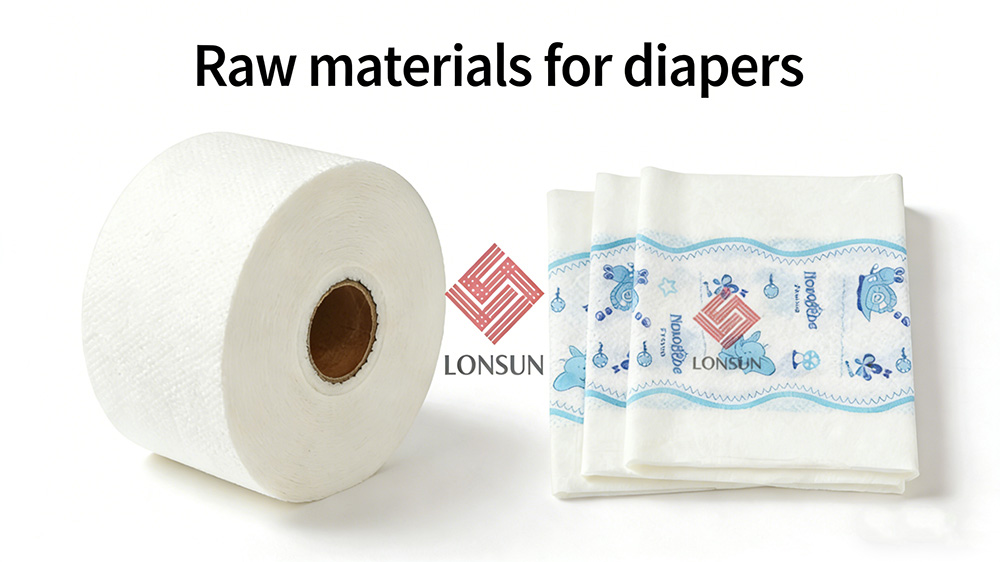
This February 2026 roundup delivers actionable insights for raw material suppliers and hygiene product manufacturers, covering key regulatory deadlines, price movements, and material innovation across the EU, US, UK, and Asia.
The EU Packaging and Packaging Waste Regulation (PPWR, EU/2025/40) will take full effect on August 12, 2026, directly applying to all member states without national transposition delays. For diaper and sanitary pad raw materials, the rules impose strict limits on chemical substances and packaging design:
| Aspect | Compliance Mandate | Impact on Your Materials |
|---|---|---|
| PFAS Ban | Intentional PFAS prohibited in hygiene product packaging; limits: 25 ppb (single PFAS), 250 ppb (total PFAS), 50 ppm (polymer PFAS) | Test raw material packaging (e.g., SAP bags, pulp bales) for non-intentional PFAS contamination from recycled materials. |
| Heavy Metals | Total lead, cadmium, mercury, and hexavalent chromium ≤ 100 mg/kg in all packaging | Audit packaging suppliers to meet unified EU limits for B2B shipments. |
| Material Traceability | Mandatory documentation for recycled content and carbon footprint | Provide batch-level COAs and sustainability certificates for EU-bound orders. |
France and other EU nations have already banned intentionally added PFAS in menstrual products starting January 1, 2025, with the EU-wide REACH regulation aligning in 2026. This applies to absorbent cores, backsheets, and adhesives—a must for sanitary pad raw material compliance.
The US Menstrual Products Right to Know Act is advancing rapidly, with mandatory full ingredient disclosure for sanitary pads, tampons, and liners. For raw material suppliers:
Disclose complete chemical compositions of SAP, adhesives, and nonwoven coatings.
Label fragrances, allergens, and processing aids (e.g., softeners in sanitary pad topsheets).
Align with FDA’s tightened safety reviews for tampon raw materials (e.g., absorbency rate testing per ASTM D5231).
Compliance deadlines are expected within 18 months of passage, making now the time to update technical data sheets (TDS) and safety data sheets (SDS) for US buyers.
Raw material costs remain the biggest variable for diaper and sanitary pad manufacturers. Here’s the latest for core inputs:
European Market: Suzano and SCA announced a USD 50/tonne price increase effective March 2026, driven by mill maintenance and tight Nordic supply.
Asian Market: Spot prices are stable (as of Feb 27, 2026) with Chinese port inventories at 240.1万吨 (up 9.4% month-over-month), easing short-term cost pressure. However, Indonesian hardwood pulp supply constraints are expected to limit declines.
Key Insight: Long-term contracts are becoming more popular as buyers hedge against EU price hikes.
2026 price volatility has narrowed to ±8% (down from ±15% in 2024) as supply chain stability improves.
Demand for high-absorbency SAP (≥400 g/g) is surging, driven by US and EU performance standards for sanitary pads and thin-core diapers.
Food-contact grade PE/PP for backsheets and topsheets is now a baseline requirement for global buyers, with Chinese domestic production accounting for 82% of supply (up from 68% in 2024).
Biodegradable nonwovens (e.g., PLA blends) are gaining traction in the Middle East (e.g., Dubai’s recent bio-diaper launch), creating new opportunities for raw material innovation.
On February 9, 2026, the UK Health Security Agency (UKHSA) linked non-sterile wet wipes contaminated with Burkholderia stabilis to infections and a fatality. For diaper and sanitary pad raw material suppliers:
Strengthen microbial testing for cellulose fibers, nonwovens, and adhesives.
Adopt aseptic processing for medical-grade hygiene raw materials (a fast-growing segment globally).
Prepare for upcoming UK rules on microbial limits and batch traceability.
EU Compliance Is Non-Negotiable: Audit packaging and raw materials for PFAS and heavy metals by August 12, 2026.
Transparency Sells: Update TDS/SDS to meet US labeling requirements—buyers are prioritizing suppliers with complete, verifiable data.
Hedge Against Price Volatility: Offer long-term contracts for fluff pulp and SAP to attract global manufacturers.
Innovate for Sustainability: Invest in bio-based nonwovens and PFAS-free adhesives to capture high-growth markets (EU, Middle East).
As a leading global supplier of diaper and sanitary pad raw materials, we understand the challenges of navigating 2026’s regulatory and cost landscape. Our portfolio includes:
Fluff Pulp: EU/US-compliant, high-absorbency grades (including FSC-certified options).
SAP: ≥65 g/g absorbency, PFAS-free, with full traceability documentation.
Nonwovens & Polyolefins: Food-contact grade PE/PP backsheets, soft topsheets, and biodegradable blends.
We provide batch-level COAs, SDS, and sustainability certificates to ensure your products meet EU PPWR, US labeling rules, and global safety standards. Contact us today to request samples or discuss your 2026 supply chain needs.


