Home
Home | About Us | Advantages | Blogs | Contact Us


- All
- Product Name
- Product Keyword
- Product Model
- Product Summary
- Product Description
- Multi Field Search
Views: 0 Author: Site Editor Publish Time: 2025-12-26 Origin: Site


Have you ever wondered what goes into the making of a feminine pad? It's a product many of us use regularly, but we rarely think about its raw materials. In this article, we will dive into the Feminine Pad Raw Materials, exploring what materials are used, how they function, and their impact on both health and the environment. By the end, you'll have a deeper understanding of the key ingredients that make up this essential hygiene product.
Feminine pads consist of several layers, each serving a specific purpose in absorbing menstrual fluid, ensuring comfort, and preventing leaks. These materials are chosen based on their absorbency, durability, and ability to maintain comfort throughout use.
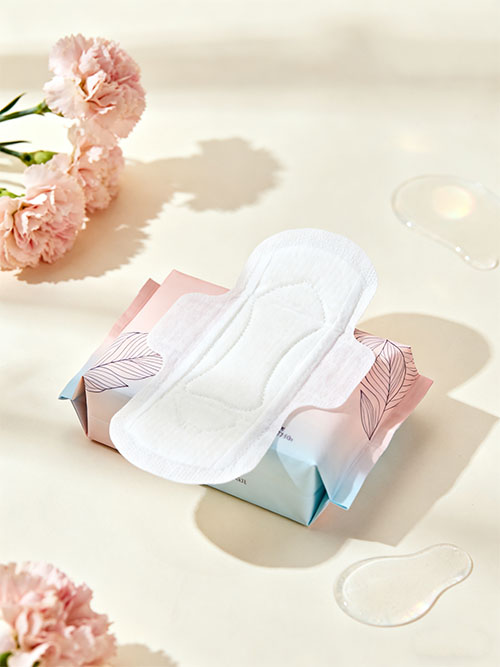
The top sheet, which is the layer in direct contact with the skin, plays a crucial role in ensuring comfort and minimizing irritation.
● Main Materials: Nonwoven fabric (polypropylene or polyethylene), organic cotton.
● Function: This layer helps wick away moisture from the skin, ensuring dryness and reducing the risk of skin irritation.
The absorbent core is the heart of the pad, where most of the liquid is absorbed and trapped to prevent leakage.
● Main Materials: Wood pulp, Super Absorbent Polymers (SAP).
● Function: The absorbent core absorbs menstrual fluid, turning it into gel to keep the surface dry. SAP boosts absorbency, allowing the pad to hold more liquid without feeling bulky.
The back sheet prevents absorbed fluid from leaking through the pad and onto clothing.
● Main Materials: Polyethylene film, breathable films.
● Function: The back sheet provides a leakproof barrier, helping the pad stay secure in place while allowing for breathability and comfort.
The adhesive layer ensures that the pad stays in place throughout use.
● Main Materials: Pressure-sensitive adhesives (PSAs).
● Function: Keeps the pad securely attached to underwear, preventing any shifting or bunching.
The materials chosen for feminine pads are critical in ensuring their performance. The selection process focuses on factors like comfort, effectiveness, and sustainability. Below is an exploration of key materials used in feminine pads.
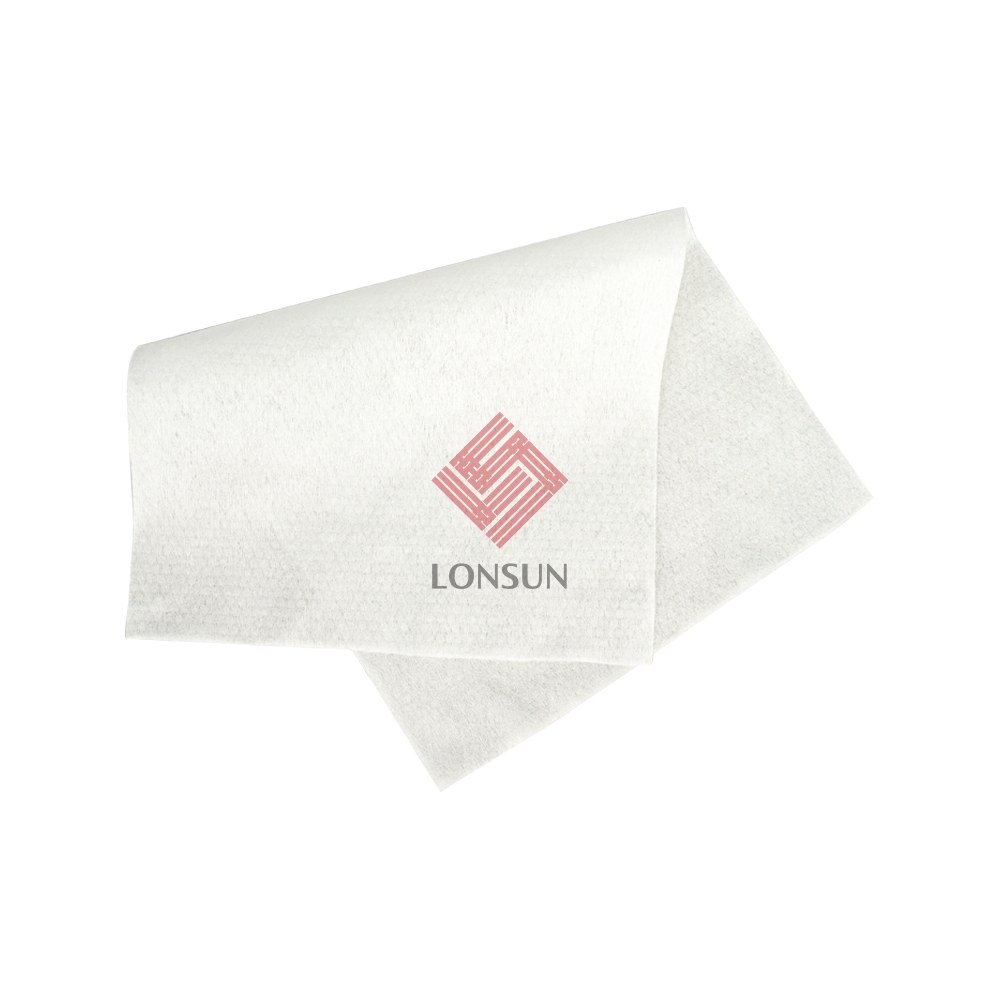
Nonwoven fabric is a versatile material used in the top and back layers of the pad. It is preferred for its softness and moisture-wicking properties.
● Types: Polypropylene, polyethylene.
● Criteria for Selection: Nonwoven fabric is chosen for its breathability, softness, and durability, all of which contribute to comfort and effective performance.
Organic cotton is gaining popularity due to its natural and chemical-free properties, making it suitable for the top sheet.
● Benefits: Organic cotton is hypoallergenic, breathable, and gentle on sensitive skin, reducing the risk of irritation.
● Sustainability: Organic cotton is grown without synthetic pesticides, making it a more environmentally friendly choice compared to conventional cotton.
Super Absorbent Polymers are crucial in enhancing the absorbency of feminine pads, ensuring they can handle higher amounts of menstrual fluid.
● Primary Function: SAPs absorb and trap fluid, turning it into a gel that prevents leakage and maintains dryness.
● Environmental Impact: SAP is traditionally made from petroleum-based materials, but new bio-based alternatives are being developed to reduce environmental impact.
As sustainability becomes a growing concern, many manufacturers are seeking out eco-friendly alternatives to traditional materials. Here are some of the innovative sustainable materials used in the production of feminine pads.
Bamboo is a renewable resource known for its fast growth and minimal environmental footprint. Bamboo fiber is increasingly used in feminine pads due to its absorbency and natural antibacterial properties.
● Benefits: Bamboo fiber is highly absorbent, naturally antibacterial, and soft on the skin.
● Sustainability: Bamboo is a rapidly renewable resource that requires minimal water and no pesticides, making it a sustainable material.
Biodegradable polymers are gaining traction as an alternative to polyethylene, which is commonly used for the back sheet of pads.
● Applications: These materials are used to replace polyethylene in the back sheet of pads, reducing plastic waste.
● Benefits: Biodegradable polymers break down naturally, leading to less environmental pollution and waste.
Other natural fibers, such as banana fiber, are being explored for their biodegradability and sustainable properties.
● Features: Banana fiber is natural, biodegradable, and provides a reduction in plastic use.
● Sustainability: Like bamboo, banana fiber is a sustainable material that has a minimal environmental impact.
The process of making feminine pads involves several stages, from the sourcing of raw materials to the final product assembly. Each step is designed to ensure that the pads meet stringent performance and safety standards.
The process of making sanitary pads involves layering absorbent materials, nonwoven fabrics, and other components to create the finished product.
● Manufacturing Process: Materials like SAP, nonwoven fabric, and the back sheet are stacked and sealed together in a multi-layered structure.
● Quality Control: Raw materials are tested for quality, ensuring they meet absorbency standards, and the final product is inspected for durability and leak prevention.
Sustainable materials such as organic cotton, bamboo, and biodegradable polymers are integrated into the production of feminine pads, reducing the environmental impact.
● How Sustainable Materials are Incorporated: These materials replace traditional petroleum-based options and contribute to reducing plastic waste.
● Benefits of Eco-friendly Design: Sustainable designs help reduce the carbon footprint of the manufacturing process, offering eco-conscious consumers an environmentally friendly option.
Pads come in various types to suit different needs. These differences are often related to the absorbency required for specific menstrual flow levels.
Different pads are designed for different flow levels. Night pads are thicker and offer more absorbency, while day pads are thinner.
● Absorbency Differences: Night pads are designed for heavier flows, while ultra-thin pads are made for lighter, everyday use.
● Material Selection: Thicker pads use more absorbent material, while ultra-thin pads utilize advanced absorbent materials to provide high absorbency without bulk.
Reusable cloth pads are becoming a popular alternative to disposable pads. Made from natural fibers like cotton, bamboo, or hemp, these pads are environmentally friendly and can be used multiple times.
● Materials: Cotton, bamboo, hemp.
● Advantages: These pads are long-lasting, reducing waste and free from synthetic chemicals and fragrances.
The materials used in feminine pads not only affect their performance but also have implications for health and the environment.
Certain materials, such as fragrances and antibacterial agents, used in traditional feminine pads may cause skin irritation or allergic reactions.
● Chemical Components: Chemicals, including fragrances and plastic-based materials, may irritate sensitive skin or cause allergic reactions.
● Benefits of Eco-friendly Materials: Organic cotton and bamboo are hypoallergenic and free of synthetic chemicals, reducing health risks for users.
Many feminine pads are made with plastic components that take hundreds of years to decompose. This leads to long-term environmental issues.
● Long-term Effects of Plastic: Pads made from plastic materials contribute to landfill waste and environmental pollution.
● Positive Impact of Biodegradable Materials: Eco-friendly materials like bamboo and biodegradable polymers break down naturally, helping reduce environmental pollution.
To provide a clearer overview, here’s a comparison of the main materials used in feminine pads, their function, sustainability, and environmental impact:
Material | Function | Sustainability | Environmental Impact |
Nonwoven Fabric (Polypropylene/Polyethylene) | Top and bottom layers for comfort and leak protection | Low sustainability (petroleum-based) | High environmental impact due to plastic |
Organic Cotton | Soft, breathable top sheet | High sustainability (chemical-free) | Biodegradable, eco-friendly |
Super Absorbent Polymers (SAP) | Absorbs and retains menstrual fluid | Low sustainability (petroleum-based) | Potential environmental impact but bio-based alternatives are emerging |
Bamboo Fiber | Absorbent, naturally antibacterial | High sustainability (renewable, minimal water usage) | Biodegradable, low environmental impact |
Biodegradable Polymers | Used in back sheet for leak protection | High sustainability (plant-based) | Reduced plastic waste, eco-friendly |
Cotton, Bamboo, Hemp (Reusable Cloth Pads) | Reusable, long-term use | Very high sustainability | Minimal waste, biodegradable |
Feminine pads are made from various materials, each serving a specific purpose. Selecting eco-friendly and health-conscious materials is crucial for both personal health and the planet. Lonsun Corporation offers innovative raw materials for disposable hygiene products, including feminine pads. Their commitment to quality and sustainability ensures that their products provide value, supporting a healthier and environmentally friendly choice for consumers.
A: Feminine pads are typically made of nonwoven fabric, organic cotton, wood pulp, super absorbent polymers (SAP), and polyethylene film. These materials make the pads comfortable, absorbent, and leak-proof.
A: The main feminine pad raw materials include nonwoven fabric, organic cotton, SAP, and breathable films. These materials work together to ensure comfort, absorbency, and leak protection.
A: Organic cotton is chosen for its softness, breathability, and chemical-free properties. It is hypoallergenic, making it ideal for feminine pads to reduce irritation and enhance comfort.
A: Yes, eco-friendly options like biodegradable polymers and bamboo fiber are increasingly used in feminine pads to reduce environmental impact and plastic waste.
A: The materials used in feminine pads, such as organic cotton and eco-friendly fibers, help reduce exposure to harmful chemicals, making them a healthier option for sensitive skin.
A: Many feminine pads now incorporate sustainable materials like organic cotton, bamboo fiber, and biodegradable polymers, which are better for the environment and health-conscious consumers.


