What nobody told me until I ruined three sets of sheets
A lot of women run into the same problem: the first two days of a period are heavy, and even with an extra-long overnight pad, you still wake up to a stained bedsheet. Period pants seem like the obvious fix.
Most people assume they're basically just a bigger, thicker pad in underwear form. That's what I thought too, at first. But they're not.
Pads and period pants do use the same core materials — soft nonwoven topsheet, acquisition layer, absorbent core (fluff pulp + SAP), and a PE waterproof backsheet. But how those materials are arranged, where they go, and what extra structures get added? Completely different. Understanding that difference is what actually helps you pick the right product for your flow and your situation.
The Obvious Part: Shape and How They Stay On
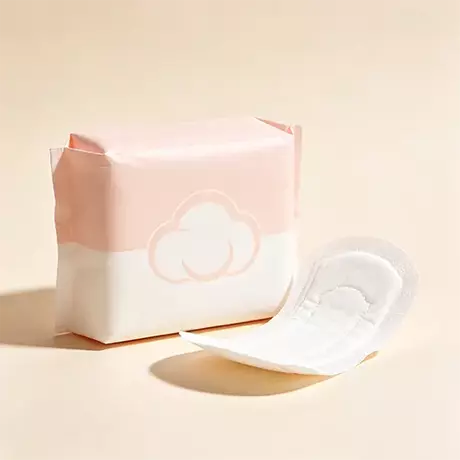
A pad is a flat piece with adhesive on the back. You stick it to your underwear, and the underwear holds it in place. That's it. It covers the crotch and nothing else. No protection for your lower back, your buttocks, or the sides of your thighs. Roll over in your sleep, and the pad moves — or doesn't move with you — and blood ends up on your clothes or your sheets.
A period pant is a one-piece disposable garment. Elastic waistband, elastic leg openings. It fits your whole lower body without needing separate underwear. Coverage goes forward to your lower belly, backward to wrap your waist and buttocks, and sideways to cover your inner thighs. It doesn't shift around when you move, which is the whole reason it works as a leak barrier in the first place.
What's Actually Different Inside
1. Where the Waterproofing Goes
On a pad, the PE waterproof film is a small rectangle under the absorbent core. That's it. The sides have nothing. The back has nothing. Once blood flows past the edges of the core, there's nothing stopping it from soaking through.
On a period pant, the waterproof backsheet covers a much larger area across the entire back — waist, buttocks, the whole rear panel. Even if blood flows backward while you're lying down, it hits that waterproof layer instead of your clothes. That's specifically why period pants solve the back-leak problem that pads struggle with.
2. The Absorbent Core Itself
Pad cores are narrow strips. Limited width, limited length. They hold a finite amount and are designed for shorter wear times.
Period pant cores are wider, longer, and extend much further back — all the way to the lower back area. There's simply more material there, so the total absorption capacity is generally higher than a standard overnight pad. That's what lets them handle a full night without changing.
3. The Leak Barriers
Pads have low, non-elastic fabric barriers on the sides. When flow is heavy or spreads sideways, blood easily flows over them. Side leaks happen all the time.
Period pants have higher, elastic barriers that wrap all the way around the thigh opening. They sit against your skin and form a seal. It's a completely different mechanism, and it actually works for preventing side leaks.
4. Elastic Components — The Thing Pads Don't Have At All
This is structural, not just material. Period pants have elastic bands in the waist and leg openings. The whole garment stays in place through tension and fit, not through adhesive. Pads have zero elastic parts. Their entire stability depends on how sticky that back adhesive is, and we all know how that goes on a hot day or after a few hours.
Myths That Need to Die
Nope. Different production lines, different structural design, completely different engineering. The full-coverage waterproofing and the core shaped to fit buttock curves aren't something you can replicate by wearing tight underwear with a thick pad. We've all tried that shortcut. It doesn't work.
Depends on the specific product. There are lightweight period pants out there that won't hold as much as a heavy-duty overnight pad. You have to check the actual absorbency, not just assume based on the category.
There's some truth here. At the same thickness, period pants have more layers and are generally less breathable than a thin pad. For heavy days, though, that tradeoff is worth it. For light days, wearing one all day can get sweaty and isn't really cost-effective. So: not only for night, but not always the best choice either.
Nothing is 100%. Exceed the absorption limit, wear the wrong size, or get a defective batch, and a period pant can leak too. It's about reducing risk, not eliminating it.
By the Numbers: What the Materials Actually Look Like
| Parameter | Standard Overnight Pad | Period Pant (Equivalent Absorbency) | Why the Difference |
|---|---|---|---|
| SAP dosage | 4–6g (35–50% of core weight) | 8–12g (40–55% of core weight) | Larger core + compression resistance |
| Fluff pulp | 8–10g | 12–18g | Extended core length + zoned density |
| Total core weight | 12–16g | 20–30g | Core area increases ~40–60% |
| Topsheet nonwoven | 18–22 gsm | 20–25 gsm | Larger contact area, softer hand feel |
| PE backsheet area | ~80mm × 280mm (local coverage) | Full back panel (~300mm × 400mm) | Prevents back-leak + side-leak |
| PE elongation requirement | Standard (150–200%) | High-grade (>300%) | Resists cracking at fold points |
| Elastic components | None | 3–5g spandex + elastic nonwoven | Leg cuffs + waistband tension |
| Leak barrier height | ~5–10mm (non-elastic) | ~15–25mm (elastic composite) | Forms circumferential seal |
| Material cost per unit | Baseline | +35–50% vs. pad | More SAP, elastic, larger backsheet |
When to Use What
Pad. No contest.
Extra-long overnight pad. Fine if you don't toss and turn.
Period pant. That's exactly what they're built for.
Period pant. The longer wear time is the whole point.
A Few Things Worth Remembering
Change them before they're completely saturated. Even if the SAP locks everything away and it feels dry, sitting in a full core for hours isn't great for your skin.
If you have sensitive skin, check what the topsheet is actually made of. Some nonwovens are softer than others, and the wrong one can chafe after a few hours.
And one more thing — this whole article is about disposable period pants. Reusable, washable period underwear exists too, but that's a different product category with different care requirements and different material choices.
Bottom line: Pads are for light, convenient, daytime absorption. Period pants are for full coverage and longer wear when you need to not think about leaks.
There's no universal "better" option. Match the product to your actual flow and your actual day. If you're sourcing materials for either product, the specifications above are a starting point — your technical team can adjust based on your target absorbency and wear time.
My sheets have never been happier.