Home
Home | About Us | Advantages | Blogs | Contact Us


- All
- Product Name
- Product Keyword
- Product Model
- Product Summary
- Product Description
- Multi Field Search
Views: 0 Author: Site Editor Publish Time: 2026-09-04 Origin: Site


A diaper or sanitary pad that performs well in one market may disappoint in another because climate, wearing habits, sizing, retail channels and expectations differ. The useful question is not which region needs a particular fabric. It is which measurable product experience local users value, and which layer changes can deliver it without disrupting production. Hygiene materials should be selected through local evidence, controlled prototypes and comparable tests rather than broad cultural assumptions.
Start with a common product baseline, identify the local complaint or unmet preference, change one material variable at a time, and validate both finished-product performance and converting efficiency. A breathable feel, thinner profile or closer fit is a system outcome, not a property that can be promised from one component alone.
Create a brief for each product family rather than a country-wide rule. Specify the target wearer, activity level, changing interval, price tier and sales channel, then state the three most important acceptance outcomes. A school-day diaper and an overnight diaper sold in the same city may require different absorbent loading and fit priorities. A pad marketed for discreet daytime use may prioritize low profile and quiet handling, while another format may prioritize capacity. Record whether evidence came from interviews, complaints, retail feedback or instrumented tests; those sources have different strengths. If the evidence is thin, label the proposed material change as a hypothesis and design a small trial before committing to a new specification. This prevents an early impression from hardening into an expensive regional standard.
Build a comparison set with consistent product size, absorbent-core mass and test conditions so that material effects can be interpreted. Ask what the user noticed first and what happened immediately before the complaint. A report of “poor breathability” may actually reflect a bulky core, poor fit, prolonged wear or a wet topsheet. Changing only the backsheet might leave the problem intact. Include shelf conditions, transit route and storage practices in the brief when heat or humidity exposure is plausible. Then separate a market-wide pattern from a single distributor’s handling issue. The output should be a short ranked problem list with a measurable baseline, a target, an owner and a decision date, not a long collection of untested regional stereotypes.
Separate evidence from hypotheses. Gather local return reasons, wearer-panel comments, fit data by size, preferred pack counts, sales-channel constraints and seasonal conditions. Record the exact failure: a damp-feeling topsheet, side leakage during movement, visible bulk under clothing, or packaging damage after distribution. Each observation points to a different design lever.
Do not assume that a hot climate automatically calls for the lightest backsheet or that all shoppers in a country want one absorbency level. Compare defined user segments and use conditions within a market. Local regulatory and labeling checks belong in the launch brief, but material selection should be driven by the intended finished-product specification and actual tests.
Treat liquid handling as a sequence. Fluid must pass the topsheet, spread through the acquisition zone, enter the absorbent core and remain there under body pressure. If the surface feels wet, compare penetration time and rewet at more than one loading event; also inspect whether fluid pools in one area before reaching the core. A surface treatment that improves first strike-through may lose effect after repeated insults or storage, so test the intended shelf life and use pattern where appropriate. Changes to aperture, basis weight or surface finish can also alter hand feel and runnability. Keep the other layers constant during an initial comparison, then retest the most promising material in a balanced final construction.
For barrier and fit materials, define the trade-off before seeking samples. Increasing stretch force can reduce gaps but may increase pressure marks or make application difficult. A softer laminate may improve touch but change bond strength or machine handling. A thin film may reduce bulk while becoming more vulnerable to pinholes under the chosen converting conditions. Ask for properties measured in both machine and cross directions when orientation matters, and check them after lamination or activation rather than only on the raw roll. The acceptance criterion should describe the complete product: containment during movement, comfort after a realistic wear period and stable output at production speed. One attractive laboratory number should not override a failed wearer or line trial.
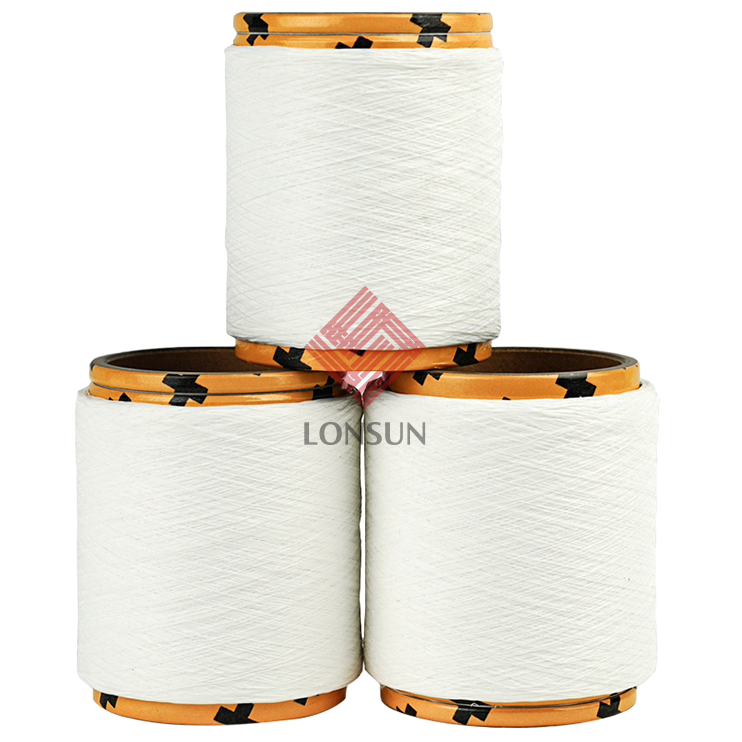
For a pad that needs a dry-feeling surface, evaluate liquid strike-through and rewet together with perceived softness. Lonsun’s SSS sanitary pad topsheet is a polypropylene spunbond option for a sanitary napkin topsheet. Its compatibility with the acquisition layer, core and finishing process matters more than an isolated fabric description.
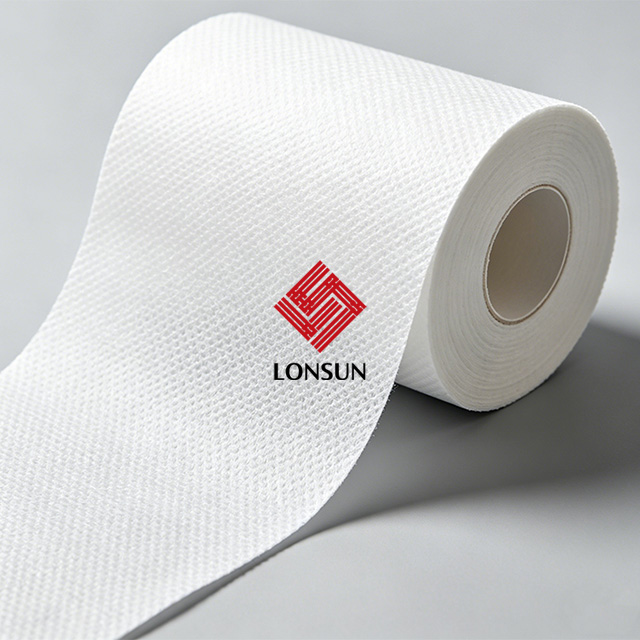
For a pad backsheet, compare barrier integrity, vapor transmission under a defined method, hand feel, printability and bonding. The specified breathable sanitary pad film is a candidate to assess alongside barrier and comfort requirements. “Breathable” must not be confused with liquid permeability.
For diaper fit, compare extension, recovery, applied tension and skin marking after wear. A diaper elastic film can contribute to stretch zones, while leg cuff spandex yarn serves leg cuffs and leakage guards. Specify where each material sits and test the assembled diaper across sizes; a stronger elastic is not automatically a better fit.
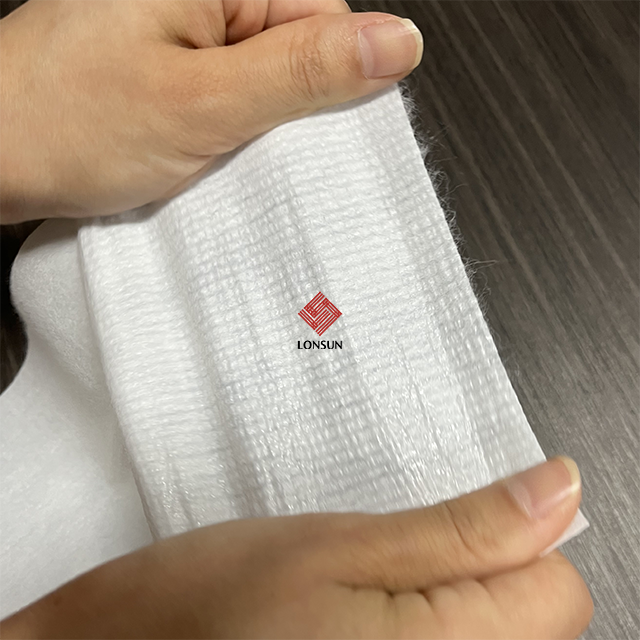
Give each trial a decision rule before it begins. For example, a revised topsheet may be accepted only if it improves the chosen surface-dryness measure without worsening acquisition, leakage or line waste beyond agreed limits. Define sample size, conditioning, test sequence and who judges subjective attributes. When a change produces mixed results, identify which requirement is essential and which can be traded against cost or appearance. Compare at least a reference construction and the proposed construction under the same procedure; if a third option is affordable, it helps reveal whether the first adjustment was too aggressive. Retain failed results as well as successful ones. They explain why a material was rejected and stop the same weak idea returning under a new product name.
Do not mistake a laboratory climate for a consumer market. The same standardized conditioning supports fair supplier comparison, but a separate challenge test may be needed for the intended storage or use extremes. Specify how long rolls remain wrapped, how the finished product is packed and what happens after opening. For regional launches, evaluate translated instructions and pack-size assumptions alongside material changes, because misuse or an unsuitable changing interval can look like a material defect. Keep the test plan proportionate: first screen obvious failures, then invest in broader wearer trials and distribution trials for finalists. A staged plan protects both development time and the integrity of the conclusion.
Finally, define what would cause a localized design to be withdrawn. Rising complaints in one size, a repeated line defect, a significant change in storage conditions or a new claim requirement should trigger review. Do not wait until every market reports the same failure. Maintain a reference sample and a small set of key performance measures for each approved variant, and compare commercial lots against them. When a change appears necessary, trace the problem to the component and process before replacing several layers at once. This preserves learning from earlier trials and makes the next decision more precise. Regional preferences are dynamic; the method for responding to them should remain stable even when the eventual material combination changes.
| Observed need | Material question | Finished-product check |
|---|---|---|
| Surface feels wet | Does the topsheet transfer fluid to the core? | Strike-through, rewet and panel assessment |
| Leakage in motion | Are cuff tension and geometry balanced? | Fit and leakage across sizes |
| Heat or bulk complaints | What changes in backsheet and core construction? | Barrier, vapor and thickness tests |
| Distribution damage | Can rolls and packs withstand the route? | Compression and transit trials |
Use a variant register that explains what is shared and what changes by market. A common topsheet and core might support several finished-product lines while cuff tension or pack count varies, but the reverse may be better when the evidence points elsewhere. Assign a unique revision to every approved construction, with corresponding drawings, roll specifications and test limits. Purchasing should not replace one approved material with another merely because the catalog names sound alike. Before a supplier change, compare the material’s functional properties and run a controlled conversion trial. A shared component strategy reduces purchasing complexity only when the shared component meets each product’s requirement; commonality is an outcome to prove, not a target to impose regardless of performance.
Review a launch after the first commercial batches. Track complaints by product size and lot, not only by country; compare repeat-purchase feedback with the original trial predictions. If a local variant performs no better than the baseline, retire it rather than carrying inventory indefinitely. If it succeeds, document the conditions under which it succeeded and test whether those conditions hold in adjacent markets. Keep claims modest and specific: measured vapor transmission under a named method, for example, is clearer than an unqualified promise that a pad “breathes better.” This closes the loop between product development, manufacturing, sales and procurement without turning localization into uncontrolled proliferation.
Before requesting a quotation, send a controlled brief containing the intended product, target roll width and core, approximate monthly demand, functional tests, acceptance limits and required documentation. Ask the supplier to identify which figures describe a standard grade and which would require a development trial. Compare offers on the same delivery and testing basis, including the cost of line trials and any additional inventory for regional variants. A vague request for “a softer material for tropical markets” produces quotations that cannot be compared. A defined problem, test method and target produces a conversation about what can actually be delivered.
Create a base bill of materials and a limited menu of approved variants. Document test methods, tolerances, sample identification, roll orientation and change-control rules. Trial the modified construction at intended line speed, then compare waste, web breaks and bonding results with the baseline. A material that wins a wearer trial but repeatedly stops the line is not ready for scale-up.
Ask suppliers for matched samples and the measurement conditions behind each reported value. Run local-use trials with consistent finished-product construction. Track what changed, why it changed and whether the improvement survives a second batch. This discipline prevents a regional assortment from becoming a collection of untraceable specifications.
Regional adaptation works best when local preferences become testable product requirements. Start with the wearer problem, change the relevant layer, verify the assembled product and confirm production stability before expanding the range. Lonsun is a manufacturer and supplier of disposable hygiene raw materials, including nonwovens, films and elastic components; buyers can use those material categories as a starting point for controlled comparisons. A repeatable decision process matters more than a generic “regional” recipe.
Yes, if the finished product passes the requirements of each target segment and market; different packaging or sizing may still be needed.
Breathability describes vapor movement under a test method, whereas liquid-barrier performance requires separate verification.
Prioritize a frequent, consequential complaint supported by local returns or user trials, then define a measurable outcome.
Start with the smallest range that addresses distinct needs; add a variant only when its performance and commercial case are demonstrated.


