Home
Home | About Us | Advantages | Blogs | Contact Us


- All
- Product Name
- Product Keyword
- Product Model
- Product Summary
- Product Description
- Multi Field Search
Views: 0 Author: Site Editor Publish Time: 2026-09-11 Origin: Site


A low quotation can become expensive when rolls break on the line, a substitute material changes fit, or documentation cannot be matched to a shipment. The right supplier decision starts with the finished product and the converter’s process, then tests whether the proposed hygiene raw materials can be supplied consistently. Treat supplier qualification as a staged evidence exercise, not a contest between catalog descriptions.
Shortlist suppliers against a written specification, request representative samples and comparable test reports, run a pilot at intended line conditions, and confirm traceability, change control and total landed cost before routine purchasing.
Write a functional specification that separates what must happen in the product from how a supplier proposes to achieve it. For a leg cuff, the requirement might concern containment and comfortable force over an agreed size range; yarn count is one input, not the outcome. For a backsheet, specify liquid barrier after converting, rather than accepting an isolated film value. Document the test method, sample conditioning, direction, unit and tolerance for every critical parameter. Include roll width, diameter, core, splice rules, winding tension and permissible edge damage because these affect line operation. A supplier can then propose an existing grade or explain where a custom development trial is needed. The resulting quotations address the same problem rather than unrelated catalog grades.
Identify interfaces early. Hot-melt adhesive, elastic activation, embossing, ultrasonic bonding and heat sealing can change a material’s behavior, so a laboratory sheet cannot represent every production route. Send suppliers a process window without disclosing unnecessary proprietary details: speed range, joining type, contact temperatures where relevant and expected storage conditions. Ask them to flag known compatibility limits and to provide enough sample length for a meaningful trial, including start-up and steady-state running. Inspect the product after the process and after a suitable hold period, since immediate appearance can conceal delayed bond or recovery problems. A strong supplier conversation begins with these interfaces, not with a list of fashionable material descriptors.
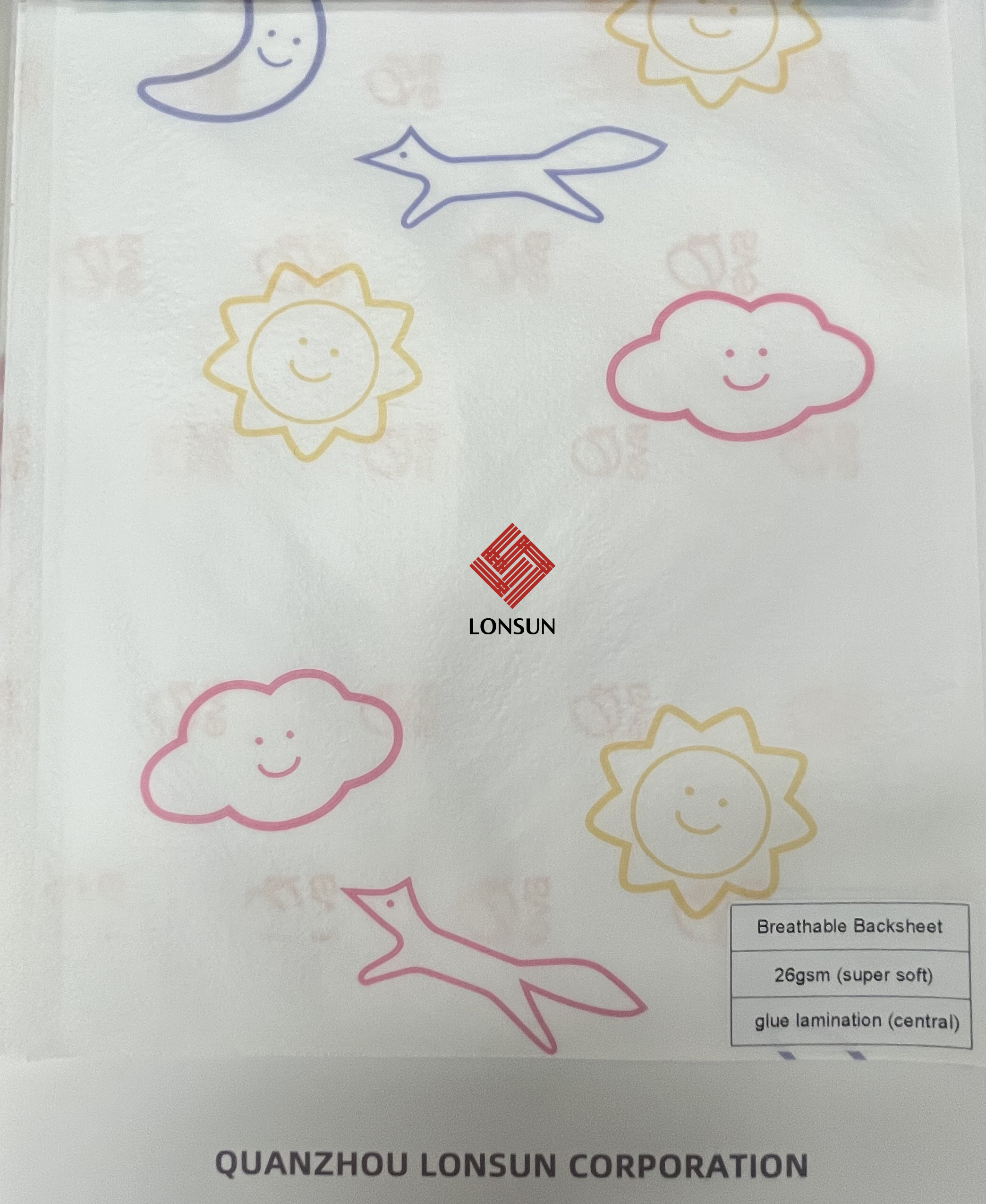
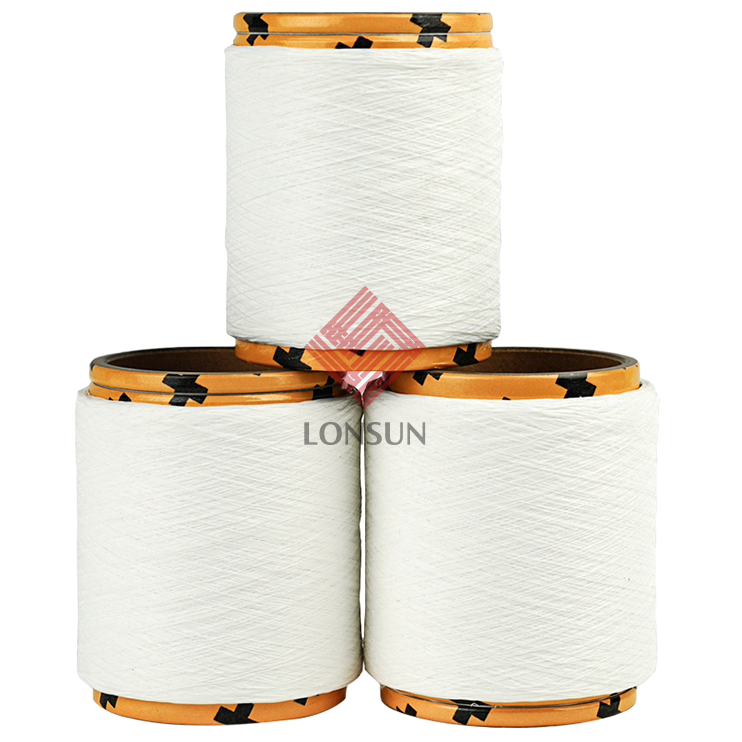
List the layer position, target product size, adjacent materials, joining method, line speed, roll handling and end-use performance. For diaper elastic film, ask about stretch direction, force at specified elongation, recovery and bonding after conversion. For leg cuff spandex yarn, the yarn specification alone is insufficient; compare actual cuff tension and fit after assembly.
For a backsheet candidate such as laminated diaper backsheet, examine the complete laminate, including bond integrity, liquid barrier, vapor transmission and process behavior. For an absorbent option such as ultra-thin SAP paper, pair capacity figures with acquisition, retention under pressure and finished-product rewet. A single headline metric rarely predicts the assembled product.
Apply gates before weighted scoring. First confirm the supplier can identify the legal seller, actual production location and exact grade, and can meet non-negotiable technical and documentation requirements. Only then compare relative merits such as price, response time or optional customization. Weight categories according to product risk: a critical leakage component deserves more emphasis on consistency and trial results than a noncritical presentation feature. Score evidence quality as well as the numerical result. A stated value without a method, sample identity or date should receive less confidence than a repeatable, lot-linked result. Keep the decision record short enough that purchasing, quality and engineering can revisit it when a supplier changes a material or a complaint appears.
A sample program should include more than a perfect hand-picked swatch. Request the same grade in production-representative rolls with the agreed winding, width and packaging. Test several locations across the roll where variation could matter, and repeat critical checks on a later lot. Record sampling rules and acceptance thresholds before seeing the data. During the pilot, count stops, web breaks, edge trimming, reject rate and usable output, alongside finished-product performance. If a supplier offers an alternative after the first trial, treat it as a new candidate with a new identifier. This staged approach detects the common gap between an attractive sample and stable commercial supply without requiring a full-scale commitment at the outset.
Check commercial resilience without accepting unsupported promises. Ask for the basis of quoted lead time, how production slots are allocated, which inputs constrain capacity and what happens when a shipment is delayed. Review whether the proposed minimum order quantity fits the buyer’s forecast and storage life. A very large trial order can obscure a quality problem by leaving excess material on hand, while an extremely small sample may not reveal line behavior. Negotiate a staged quantity that supports meaningful qualification. Where a second source is considered, qualify it against the same functional specification and finished-product tests. Dual sourcing reduces dependence only when both materials genuinely work and change control prevents silent substitution.
Ask the cross-functional team to sign off the decision. Engineering should confirm the material works in the product and on the line, quality should approve methods and traceability, procurement should normalize costs, and operations should confirm receiving and inventory constraints. Record unresolved conditions and the person responsible for closing them before the first routine order. Avoid making a supplier “approved” for every material because one grade passed a trial; approval should specify material code, site, use and revision. Revisit the scorecard after several commercial lots. A supplier who communicated well during qualification may still need corrective action if repeat batches drift, and a supplier with a slower first response may improve after clear requirements are established.
| Gate | Evidence to request | Decision question |
|---|---|---|
| Technical fit | Specification and method-linked results | Does the sample meet the application? |
| Conversion | Pilot run, waste and defect record | Does it run at intended conditions? |
| Consistency | Lot identification and acceptance limits | Can repeat batches be compared? |
| Supply | Capacity plan, lead-time basis and backup plan | Can demand variability be managed? |
| Commercial | Pack, freight, duty and payment assumptions | What is the comparable landed cost? |
Traceability should work in both directions. From one finished-product lot, the buyer should be able to identify the incoming material lots used; from a questionable material lot, the buyer should be able to identify affected finished goods and remaining inventory. Agree on roll labeling, pallet identification, retention periods and how split lots are recorded. If material is cut, rewound or repacked, preserve the link to its original lot. Ask how quickly the supplier can provide production and inspection records during a deviation. A certificate displayed on a website is not an operational traceability system. Practice a document retrieval exercise before a crisis so missing links can be repaired while the relationship is still being qualified.
A practical change agreement lists examples and the response to each. A new resin grade, fiber blend, hydrophilic treatment, adhesive, laminate structure, site or critical test method may require advance notice, samples and requalification. A minor packaging adjustment may require a narrower review, but it can still affect roll protection or shelf storage. State who may approve a temporary deviation, how long it lasts and which lots it covers. Keep an approved reference sample and versioned specification where appropriate. The goal is not to freeze innovation; it is to prevent an unreviewed change from entering a product whose performance depended on the earlier material.

Ask for the legal entity, manufacturing site, relevant process scope, sample-to-lot identification and the version of every specification. Request the test method, conditioning and units for each number. Agree in writing which changes require notice and requalification: polymer grade, treatment, layer structure, coating, roll geometry or production location may all matter.
Audit claims separately from performance. A management-system certificate, if supplied, does not certify every roll or prove a finished diaper compliant in a destination market. Match reports to material codes and dates, check issuing bodies where applicable, and obtain the documentation required for the intended use.
Build a comparable landed-cost model from a fixed production unit. For example, compare cost per accepted square meter or per thousand finished units after expected line yield, rather than mixing price per kilogram with different basis weights. Add freight mode, pallet utilization, customs charges where applicable, receiving inspection, scrap and working capital from lead-time differences. Run a sensitivity check for a higher reject rate or a delayed shipment. This is not an invitation to invent precise forecasts: use documented trial data where available and show assumptions separately. A slightly more expensive roll may reduce waste; an expensive grade may add no measurable value. Both conclusions require a fair model with the same finished-product acceptance standard.
Plan for a failure before it occurs. Agree on the contact path, first containment action, evidence to collect, replacement or credit rules and time to respond. An incoming inspection failure may be easier to contain than a defect found after conversion, so define how both scenarios will be handled. Consider a qualified second source for a critical component, but do not assume nominally similar grades are interchangeable without a trial. Monitor late delivery, complaint recurrence and corrective-action effectiveness over time. Supplier choice is therefore an ongoing control process: the original approval remains useful only when current lots, process changes and service outcomes continue to support it.
Separate a technical rejection from a negotiable commercial difference. If a material fails a mandatory barrier or fit criterion, a low price does not make it qualified. If several candidates meet all gates, compare the cost and service trade-offs transparently. Document the conditions under which a different choice would become preferable, such as a freight-rate shift, a higher forecast or a new line speed. This keeps the selection from appearing arbitrary and makes future re-sourcing faster. The final approval package should include the baseline specification, trial record, accepted lot evidence, commercial terms and a named owner for ongoing monitoring. It is a practical operating file, not a one-time presentation.
Normalize quotes by usable output, not simply price per kilogram. Include yield, line stoppage, trimming, roll changes, freight, storage, inspection and rejected lots. Ask how the supplier identifies affected batches, handles nonconforming goods and documents corrective action. A small price difference may be outweighed by avoidable disruption; the reverse can also be true when performance is equivalent.
A reliable supplier is one whose materials fit the product, run on the line and remain identifiable across repeat orders. Document the acceptance criteria, verify representative lots and maintain a practical escalation route for deviations. Lonsun is a manufacturer and supplier of disposable hygiene raw materials with film, nonwoven and absorbent categories; any purchase still merits application-specific testing and commercial comparison. The supplier scorecard should follow the product risk, not a generic checklist alone.
Prioritize components whose failure affects leakage, fit, skin contact or line continuity, and define the relevant tests for each.
No; establish lot acceptance limits, traceability and notification rules, then compare production batches with the approved reference.
Use the same specification, pack and delivery terms, then include yield and operational costs in the landed-cost comparison.
No; certificates address defined scopes, while a pilot checks the material in the buyer’s actual process and product.


