Think diaper pants are just the "upgraded version" of taped diapers? Most parents get this wrong — and it can lead to leaks, red marks, and wasted money.
This 5-minute guide will help you pick the right type for your baby's exact age and stage. No fluff, just answers.
Newborn to non-walker? Use taped diapers. Crawling, walking, or potty training? Switch to diaper pants. Overnight or heavy wetter? Taped diapers win. That's 80% of parents sorted right there.
Choosing the right diaper isn't just about convenience — it's about preventing leaks, protecting sensitive skin, and matching your baby's development stage. The two main options are traditional taped diapers (with adhesive side tabs) and modern diaper pants / pull-ups (with an elastic waistband). Here's everything you need to know to make the right call.
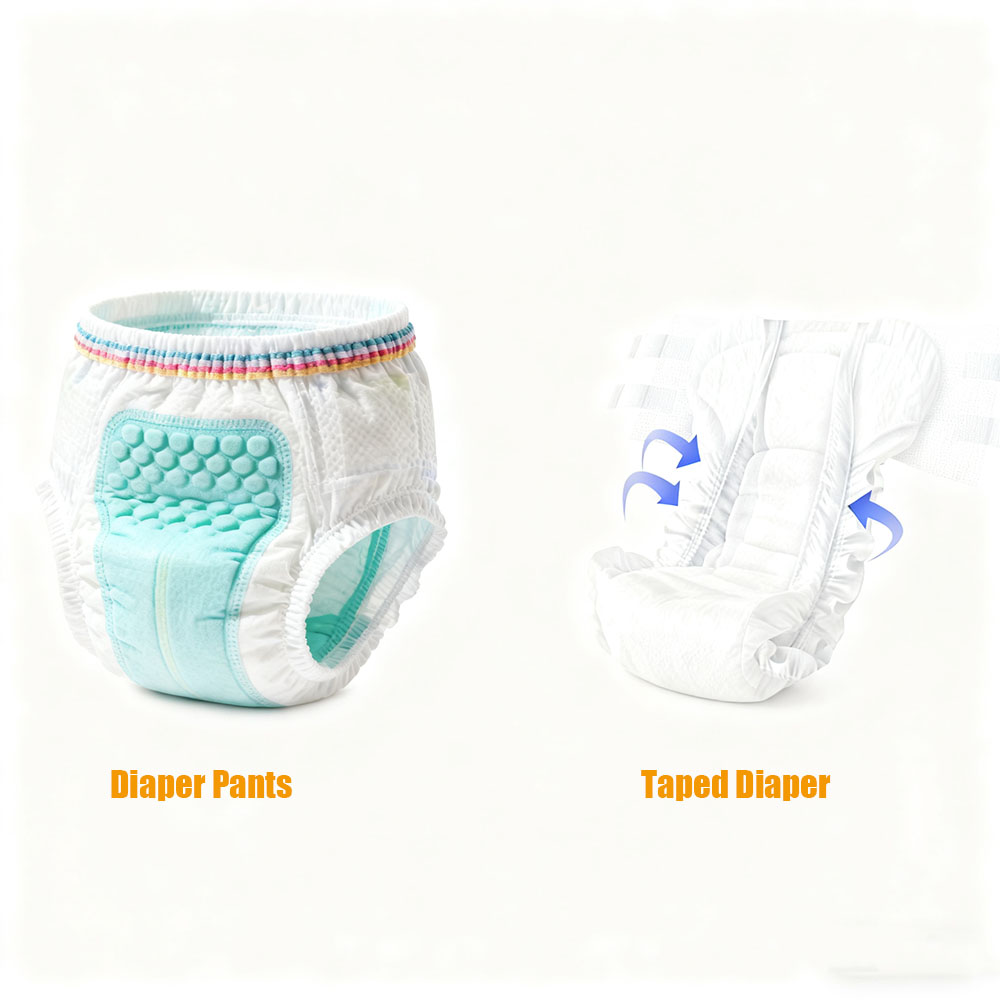
- Switching to diaper pants too earlyParents often buy diaper pants for newborns because they look "modern." But without adjustable tapes, you can't fine-tune the fit — leading to gaps, leaks, and blowouts.
- Using diaper pants for messy changesWhen there's poop involved, pulling a diaper down over the legs spreads the mess everywhere. Taped diapers open fully at the sides for a cleaner cleanup.
- Ignoring the day/night split strategyMany parents use one type 24/7. But taped diapers seal tighter for overnight protection, while diaper pants excel during active daytime hours.
Core Differences at a Glance
| Aspect | Taped Diaper | Diaper Pants (Pull-Ups) |
|---|---|---|
| Design & Fastening | 2–4 adhesive side tapes; fully adjustable waist fit | Underwear-style with elastic waist and leg cuffs; pulled up like pants |
| Best For | Newborns to non-walking infants (0–12 months) | Active babies & toddlers (8+ months) who stand, crawl, or walk; potty training |
| Putting On / Taking Off | Baby must lie down; easy to adjust for wiggly infants | Can be changed while child stands; ideal for quick on-the-go changes |
| Leakage Protection | Adjustable tapes create a tighter seal — superior for overnight and heavy wetters | Elastic fit is snug but less adjustable; best for daytime light-to-moderate wetness |
| Messy Changes | Open fully at sides — cleaner poop cleanup | Must pull down over legs — higher risk of spreading mess |
| Cost Efficiency | Generally lower cost per unit; no wasted features for newborns | Often pricier per unit; unnecessary expense before baby is mobile |
How to Choose by Scenario
Overnight & Heavy Wetters
Taped diapers win here, hands down. The adjustable tapes let you create a custom seal around the waist and legs that elastic waistbands simply can't match. If your baby wakes up with wet pajamas, switching to a taped diaper (or going up a size in taped) often solves the problem overnight.
☀️ Daytime & Active Play
Diaper pants shine when your baby is on the move. Crawlers and walkers resist lying still for changes — diaper pants can be pulled up in seconds while they stand, reducing battles and making outings far less stressful.
Potty Training Stage
This is where diaper pants truly earn their keep. They function like real underwear, letting your child practice pulling them up and down independently. This builds confidence and makes the eventual transition to regular underwear much smoother. Many parents start introducing diaper pants around 18–24 months, even if they still use taped diapers at night.
The Real Convenience Breakdown
"Convenient" depends entirely on your situation. Here's the honest truth:
✅ Taped Diapers Win When:
- Your baby is 0–6 months old
- You need overnight leak protection
- You're dealing with frequent poop explosions
- Your baby has an irregular body shape (preemies, chunky thighs)
- You want the most cost-effective option
✅ Diaper Pants Win When:
- Your baby crawls, stands, or walks
- You change diapers in public restrooms often
- Your toddler resists lying down
- You're starting potty training
- You need lightning-fast changes on the go
The Hidden Drawbacks of Diaper Pants
Diaper pants aren't perfect. Here are the trade-offs most brands won't highlight:
- Limited Fit Adjustability The elastic waistband is fixed. If the size is slightly off, it's either too loose (leaks) or too tight (red marks). Taped diapers let you customize the fit every single change.
- Messy Changes Are Trickier Pulling a soiled diaper down over the legs increases the risk of spreading waste. With taped diapers, you simply unfasten the sides and lift it away.
- Higher Cost for Younger Babies Diaper pants often cost more per unit. For newborns who don't benefit from the pull-up feature, this is money down the drain.
FAQ: Real Questions from Real Parents
Technically yes, but it's not recommended. Newborns need the adjustable fit of taped diapers, and they can't stand for pull-up changes. Wait until your baby is crawling or standing confidently.
Taped diapers handle in-between sizes better because you control the tightness. With diaper pants, if the size is wrong, the fit is wrong — and leaks follow.
Many parents use a hybrid strategy: diaper pants during the day for convenience, and taped diapers at night for leak protection. This gives you the best of both worlds.
Most children show readiness signs between 18–30 months. Look for staying dry for 2+ hours, showing interest in the toilet, and disliking dirty diapers. Introduce diaper pants when they can pull them up and down with minimal help.
Generally yes, per-unit costs are 10–30% higher. However, the convenience factor for active toddlers often justifies the premium. For newborns, the extra cost brings zero benefit.