Home
Home | About Us | Advantages | Blogs | Contact Us


- All
- Product Name
- Product Keyword
- Product Model
- Product Summary
- Product Description
- Multi Field Search
Views: 0 Author: Site Editor Publish Time: 2026-09-20 Origin: Site


B2B manufacturing in the hygiene sector faces a constant, complex challenge. Manufacturers must balance consumer demands for premium, skin-friendly products against the strict realities of production limits. High-speed machine runnability often competes directly against the need for ultra-soft, breathable textures. Traditional monocomponent materials frequently struggle to meet these dual demands efficiently. Consequently, the premium hygiene market has shifted heavily toward engineered synthetic solutions. These advanced alternatives resolve structural and sensory bottlenecks simultaneously without sacrificing output speeds.
This article provides a comprehensive evaluation framework for integrating specialized engineered materials into your production lines. You will discover how to dramatically improve fluid management and tactile softness for end-users. We also explore precise methods to maintain core structural integrity throughout the entire manufacturing process. Engineering teams can use this guide to optimize machine settings and elevate final product quality.
Sheath-Core Advantage: Bicomponent fibers utilize a dual-polymer structure (e.g., PE/PET) that allows for thermal bonding without chemical binders, yielding a safer, softer end product.
Process Synergy: When paired with Hot Air Through Nonwoven technology, these fibers create high-loft, porous structures critical for rapid liquid acquisition.
Risk Mitigation: Successful adoption requires auditing suppliers for batch-to-batch consistency and calibrating thermal bonding equipment to match specific polymer melting points.
The hygiene industry relies heavily on precise material engineering to achieve both strength and softness. Manufacturers increasingly turn to Bicomponent Fibers to solve complex structural problems. These unique fibers feature a specialized dual-polymer configuration. We call this a sheath-core dynamic. Manufacturers design the outer sheath using a lower-melting-point polymer. Polyethylene (PE) serves as the standard choice for this outer layer. The inner core utilizes a higher-melting-point polymer. Polyester (PET) or Polypropylene (PP) typically forms this robust inner structure.
This sheath-core configuration enables highly efficient thermal bonding. When the material enters a heating oven, the temperature specifically targets the PE sheath. The sheath melts slightly and flows into the fiber intersections. Meanwhile, the PET or PP core remains entirely solid. It acts as a stable skeleton. As the web cools, the melted sheath hardens. This creates incredibly strong mechanical bonds at every intersection point. The web gains exceptional stability. The fibers retain their original strength.
Traditional nonwoven manufacturing sometimes relies on chemical binders to hold fibers together. These binders introduce significant safety risks. Chemical residues can cause severe skin irritation. Consumers actively avoid brands associated with dermatological issues. Thermal bonding completely eliminates the need for these chemical additives. You achieve a pure, mechanically bonded web. This purely physical bonding method enhances safety profiles. Dermatological compliance becomes much easier to prove. Your final products can confidently feature "chemical-free" or "hypoallergenic" marketing claims.
Best Practice: Always request thermal profiling data from your supplier. You must know the exact melting point of the PE sheath to prevent accidental core degradation during production.
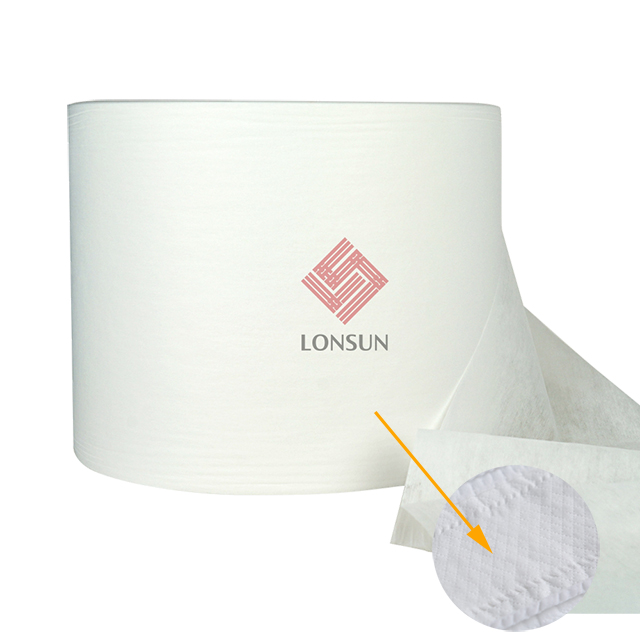
Softness remains the primary driver of consumer preference in premium hygiene markets. To maximize this trait, manufacturers pair engineered fibers with specialized heating processes. The combination creates remarkable tactile results. Hot Air Through Nonwoven technology represents the gold standard for processing these materials. The process uses forced hot air to penetrate the fiber web completely.
Unlike calendar bonding, which uses heavy heated rollers, the hot air method prevents compression. The heated air blows directly through the unbonded web. It gently melts the PE sheath without flattening the structure. This preserves the three-dimensional architecture of the web. You get a bulky, highly porous fabric. The resulting loft provides exceptional cushioning. End-users perceive this high loft as superior luxury and comfort.
To further enhance softness, engineers incorporate ultra-fine fibers into the web. We measure fiber thickness in denier. Standard fibers might measure 2.0 denier or higher. Premium products now utilize ultra-fine deniers below 1.5. Lower denier translates directly to reduced tactile friction. The surface feels remarkably smooth against delicate skin.
Enhanced Subjective Softness: Finer fibers bend easily, creating a silky surface feel.
Increased Fiber Count: Lower denier means more individual fibers per square inch. This improves uniform coverage.
Better Premium Positioning: Ultra-soft textures command higher retail prices.
Packaging operations impose intense pressure on sanitary products. Machines compress the pads tightly to minimize packaging volume. Standard materials often crush under this pressure. They emerge flat and stiff. However, the dual-polymer structure resists permanent deformation. The PET core acts like a microscopic spring. When the consumer opens the package, the pad quickly regains its original loft. This recovery ensures the product looks and feels premium right out of the wrapper.
Softness matters little if the product fails to manage moisture effectively. The topsheet must move liquid away from the skin instantly. Engineered dual-polymer structures excel at this task. The inherent loftiness creates a highly permeable barrier. We call this a porous gradient.
The three-dimensional web features large void spaces between the fibers. These spaces allow fluid to pass through rapidly. Industry professionals measure this as strike-through performance. A faster strike-through time means the user feels dry quicker. The bulky structure essentially acts as a high-speed funnel. It channels moisture downward into the absorbent core layers. This mechanical design prevents pooling on the surface.
Synthetic polymers like PE and PET naturally repel water. They are highly hydrophobic. To manage fluid directionality, manufacturers apply durable hydrophilic spin finishes. These specialized chemical coatings change the surface tension of the fibers.
The coating attracts moisture immediately upon contact.
It guides the liquid down the fiber pathways.
The finish resists washing away during repeated insults (multiple fluid exposures).
Moving fluid down is only half the battle. You must keep it there. The fiber matrix plays a crucial mechanical role in preventing rewet. Rewet occurs when fluid squeezes back to the surface under pressure. The lofty web creates a physical distance between the skin and the underlying superabsorbent polymers (SAP). The structural integrity of the PET core maintains this gap even when the user sits or moves. The topsheet remains dry. The user stays comfortable.
Chart: Benchmark Targets for Liquid Acquisition
Performance Metric | Industry Standard Target | Impact on User Experience |
|---|---|---|
Initial Strike-Through Time | < 3.0 seconds | Immediate feeling of dryness. |
Repeated Strike-Through | < 5.0 seconds | Confidence during heavy flow periods. |
Rewet Value | < 0.1 grams | Prevents skin irritation and discomfort. |
Run-off Volume | 0 ml | Eliminates side leakage risks. |
Procurement teams face critical decisions when sourcing materials. You cannot select suppliers based on subjective feel alone. You must demand objective, verifiable data. Evaluating Sanitary Napkin Raw Materials requires a strict performance benchmarking framework. Sourcing managers must request specific technical data sheets (TDS) before initiating pilot runs.
Start by analyzing the tensile strength parameters. You need data for both the Machine Direction (MD) and Cross Direction (CD). A balanced MD/CD ratio indicates uniform fiber distribution. Weak CD strength leads to web tearing during high-speed converting. You also need precise elongation parameters. The material must stretch slightly without breaking. Additionally, request certified test results for strike-through times and rewet values. These metrics dictate the ultimate viability of the fabric.
Consistency separates elite suppliers from average ones. Tight specifications matter immensely. You must audit your suppliers for fiber denier variance. If the denier fluctuates, the softness varies wildly. Spin finish application must also remain uniform. Inconsistent hydrophilic coatings cause uneven fluid absorption. Even worse, physical inconsistencies lead to severe machine jamming. Machine downtime destroys production schedules. Demand statistical process control (SPC) data from your vendors.
Global hygiene standards grow stricter every year. Your chosen Sanitary Pad Nonwoven must pass rigorous safety audits. Demand verified certifications from independent testing bodies.
OEKO-TEX Standard 100: Ensures the fabric contains no harmful substances.
REACH Compliance: Verifies adherence to European chemical regulations.
VOC Testing: Confirms the absence of volatile organic compounds.
Skin Sensitization Tests: Proves dermatological safety for intimate contact.
Common Mistake: Never accept generic compliance letters. Always request batch-specific certification numbers and verify them directly with the issuing laboratory.
Transitioning to advanced engineered fibers presents distinct manufacturing challenges. You cannot simply drop new rolls onto an old machine line. Engineering teams must prepare for specific implementation hurdles. Careful planning prevents catastrophic production delays.
Thermal bonding equipment requires meticulous recalibration. You must control the temperature in the heating zones precisely. If the temperature drops too low, the PE sheath fails to melt sufficiently. This results in poor intersectional bonding. The final fabric will suffer from severe linting and fuzzing. Loose fibers will contaminate your cleanroom environments. Conversely, if the temperature spikes too high, you risk melting the PET core. A compromised core destroys the web's tensile strength entirely. The fabric will snap under tension. Work closely with equipment technicians to map oven temperatures accurately.
High-loft materials behave differently under tension. Transitioning to these bulky materials usually requires immediate adjustments to web tensioning systems. If the tension runs too high, you will permanently crush the loft you just paid to create. Winding speeds also require careful synchronization. You must wind the final rolls loosely enough to preserve the three-dimensional structure. However, the roll must remain tight enough to prevent telescoping during transit. Finding this exact balance requires extensive pilot line testing. Plan for significant scrap generation during the initial trial phases.
Upgrading to advanced dual-polymer engineered fibers represents a strategic maneuver, not just a simple material swap. Manufacturers use this technology to elevate their product tiering directly. You can transform a standard hygiene product into a premium market leader. The structural advantages provide tangible benefits in both softness and fluid management.
However, success depends entirely on precision execution. You must pair the correct fiber specifications with highly calibrated hot air processes. Inconsistent raw materials or poorly adjusted ovens will quickly negate any theoretical advantages. Quality control must remain rigorous at every production stage.
We encourage procurement and engineering teams to take immediate action. Contact your current material suppliers today. Request updated technical data sheets (TDS) for their dual-polymer offerings. Verify their safety certifications independently. Most importantly, order sample rolls to begin pilot line testing immediately. Proactive evaluation ensures your production lines stay ahead of shifting consumer demands.
A: The core polymer dictates the difference. PET (Polyester) cores offer superior resilience, excellent compression recovery, and higher temperature resistance. They excel in premium high-loft topsheets. PP (Polypropylene) cores are more cost-efficient and provide a distinct, highly drapable softness profile. Manufacturers often choose PP for standard tiers where budget constraints exist.
A: Hot air through technology provides vastly superior loft, bulk, and 3D softness. It creates a plush, cushioned feel ideal for premium topsheets. Spunbond processes create flatter, denser, and stiffer fabrics. Spunbond offers higher tensile strength at a lower cost, making it suitable for standard, cost-driven product tiers.
A: Yes, they are highly compatible. However, you must recalibrate your ovens and calendar rolls. You must match the specific melting point of the PE sheath (typically around 130°C). Failing to adjust temperatures can lead to poor bonding or complete degradation of the core polymer material.
A: The industry relies on standardized EDANA/INDA testing protocols. The Liquid Strike-Through Test measures the exact time (in seconds) it takes fluid to pass through the topsheet. The Rewet Test measures how much fluid (in grams) returns to the surface under applied pressure. These validate vendor performance claims.


