Home
Home | About Us | Advantages | Blogs | Contact Us


- All
- Product Name
- Product Keyword
- Product Model
- Product Summary
- Product Description
- Multi Field Search
Views: 0 Author: Site Editor Publish Time: 2026-09-07 Origin: Site


A single “standard” product can leave important needs unmet: bodies vary, mobility changes, flow and use periods differ, and some wearers prefer discreet formats or neutral presentation. For a hygiene brand, inclusion becomes useful only when it changes a product decision. Custom hygiene materials can support a broader set of fits, absorbency profiles and tactile experiences, but material variation must be tied to a defined user need and tested in the finished article.
Define the use case first, select a small number of material variables that affect it, and validate performance across representative sizes and wear conditions. Inclusive design is a process of expanding practical choices, not a claim that one construction suits everyone.
Map needs along independent axes: absorbency, fit, dexterity, discretion, skin-contact sensation and disposal convenience. A wearer may need high capacity and a low-profile silhouette, while another may value a fast change more than minimum thickness. Do not force these needs into a single demographic box. Recruit a panel that reflects the intended range of sizes and mobility, and invite feedback on application, movement, removal and disposal, not only first touch. Keep the questions neutral so participants can describe discomfort or leakage in their own words. Translate repeated comments into a measurable brief, then examine whether one construction can cover several needs or whether a genuinely distinct variant is justified.
Distinguish language and presentation from physical construction. A gender-neutral name or package can make a product easier to find, yet it does not correct a narrow fit range or inadequate fluid handling. Conversely, a technical variant can solve a fit problem even if its branding remains unchanged. Review instructions, size charts and imagery with the same care as the material specification, because people must be able to identify the right product and apply it correctly. For accessibility, examine opening force, fastening sequence, grip area and disposal steps in realistic settings. These features may require packaging or converting changes rather than a new substrate, and that distinction can save unnecessary material development.
Use scenarios that expose trade-offs rather than asking for an abstract ideal. One scenario might involve several hours of seated work, another repeated bending and movement, and another a hurried change away from home. Ask what would make the product unacceptable in each setting. Include disposal and packaging feedback because a material choice that increases bulk may affect the pack as well as the product. Analyze comments by need and size, but protect individual privacy and avoid implying a medical diagnosis from ordinary product feedback. If an accessibility barrier appears, test the entire user journey from locating the right pack to disposing of the used product. Material selection is one part of that journey, not its only solution.
A useful brief describes the job the product must do: daytime discretion, overnight capacity, easier changing, flexible movement, lower surface wetness or a softer hand feel. Ask participants about the actual product experience without presuming that gender, age or region determines every preference. Include users with different body shapes and mobility needs in the evaluation design.
Separate an essential performance requirement from a preference. Leakage control and material integrity are basic acceptance gates; color, texture and pack presentation may be optional choices. A product line can offer meaningful variety without creating a unique bill of materials for every audience label.
An absorbent system involves a surface, acquisition path, storage layer and barrier. If a prototype leaks at the edge, adding more absorbent material in the center may not fix the fluid pathway. Investigate local saturation, core shape and containment geometry first. For a thin concept, compare thickness before and after loading; a material that looks thin dry can swell substantially in use. Measure multiple liquid additions and pressure-related rewet, and include the chosen product size and wear period. If the goal is a more discreet pad, also assess bending stiffness and noise under clothing. These checks show why core material selection must be evaluated in a finished product rather than through a capacity value alone.
Elastic components have a similarly connected effect. A stronger waist panel may secure a product during movement, but it can also increase application force or roll down on a different body shape. Measure force at the extension actually encountered in the product, recovery after repeated movement and the distribution of pressure across the panel. Compare the same finished-product size on several body shapes; a single mannequin or flat tensile test cannot represent every wearer. At the converting stage, verify bond durability, edge behavior, cut accuracy and scrap. If a panel requires activation, test the material after that step. The development brief should state the fit outcome and the acceptable trade-offs, not merely request “more stretch.”
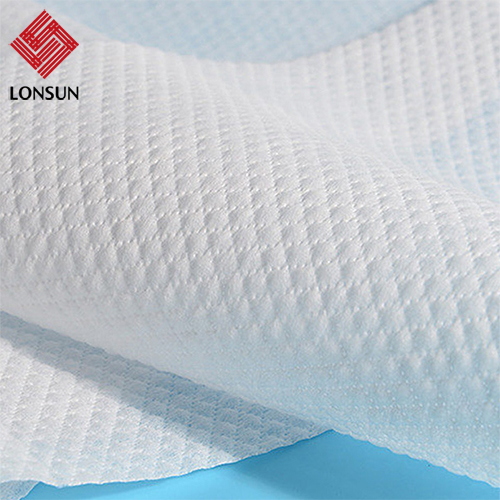
For a thinner pad concept, consider ultra-thin SAP paper as a candidate absorbent component, then test acquisition speed, retention under load, distribution and finished-pad flexibility. A thinner core alone does not guarantee a drier surface or sufficient capacity. For a different core architecture, air-laid absorbent paper can be assessed for its contribution to structure and liquid management in conjunction with other layers.
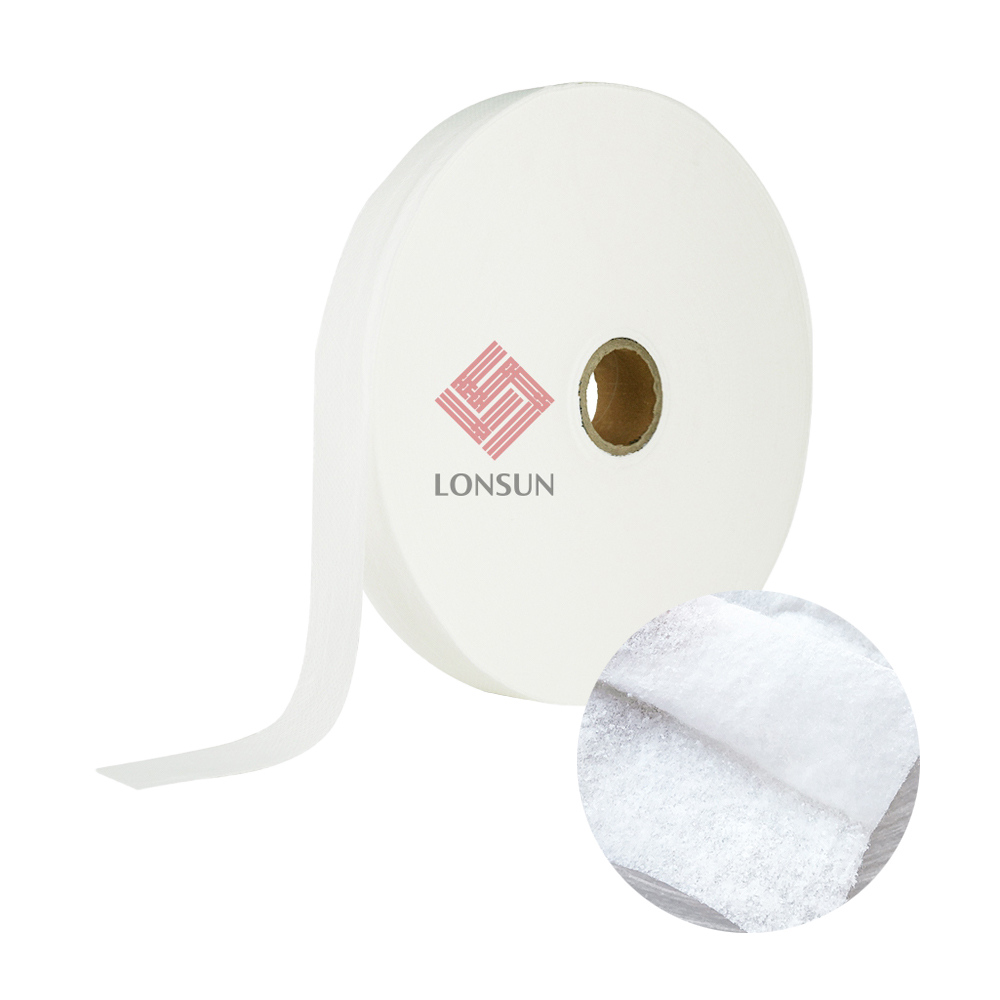
For changing fit and movement, elastic diaper nonwoven offers an elastic nonwoven option used in diaper construction. Compare stretch direction, recovery, applied force, bonding and feel in the assembled panel. If the product is a wipe, the supplied crosslap spunlace wipe fabric is a 30% viscose and 70% polyester crosslap spunlace substrate; evaluate wet strength, lotion compatibility and dispensing for the intended format.
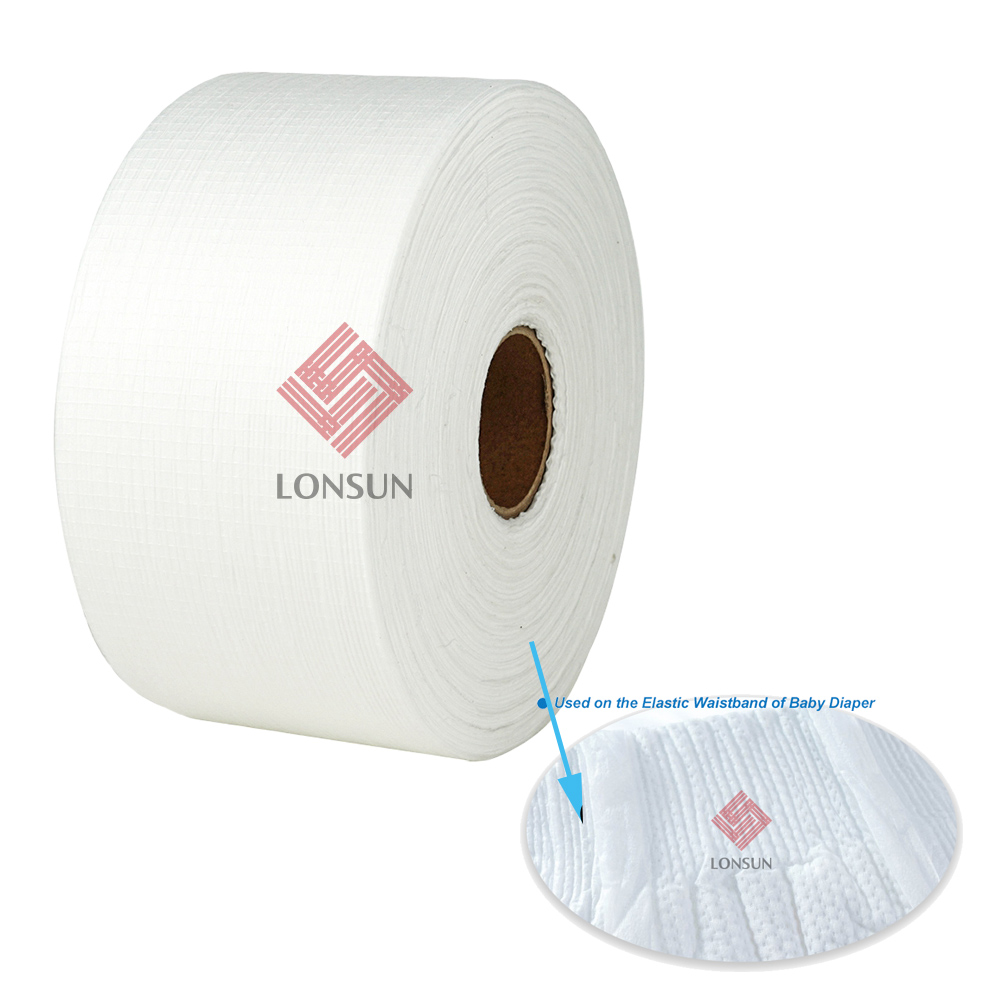
Build a test matrix that distinguishes acceptance gates from preferences. Barrier integrity, basic containment and material identification may be gates; feel, appearance and pack presentation can be ranked among passing candidates. Set the method and threshold before viewing results. Ask a panel to rate attributes separately rather than giving a single overall score, and blind the samples where practical. Combine these ratings with instrument measures and production data. A material can improve touch while reducing wet strength, or improve capacity while increasing thickness after loading. Report such trade-offs plainly. When a candidate fails a gate, do not rescue it with a high preference score; change the construction and retest.
Use the same language in product development and sourcing. A request for “premium softness” is difficult to reproduce, whereas a named comparison sample, a defined hand-feel panel protocol and physical limits can be checked across lots. Record the exact roll, material revision, lotion formulation if relevant, process setting and finished-product sample used in each trial. If the product changes from dry to wet use, repeat compatibility and stability work; a wipe substrate’s dry feel does not predict its behavior after saturation. Repeat promising results on more than one production batch. This creates an evidence trail for personalization rather than a collection of attractive but unstable prototypes.
For wet wipes, validate the substrate with the intended liquid formulation and packaging system. Wet strength, liquid pickup, release, fold stability and one-at-a-time dispensing can pull in different directions. A heavier or more textured fabric may feel substantial but raise pack thickness or dispensing force. Test after storage, not only immediately after saturation, and check the first, middle and last wipes in the pack. For a product described as gentle, avoid treating a pleasing textile feel as proof of dermatological suitability. Confirm the exact finished-product claim through appropriate evidence. This illustrates a broader principle: personalization should be measured at the moment of use, under the conditions the customer will actually encounter.
| User need | Candidate change | Validation |
|---|---|---|
| Lower bulk | Core architecture | Thickness, capacity and rewet |
| Freedom of movement | Elastic panel construction | Fit, recovery and skin marking |
| Different wipe feel | Substrate construction | Wet strength, texture and dispensing |
| Longer wear period | Absorbent-system balance | Loading, leakage and comfort trials |
Use controlled comparisons with a common baseline. Change one or two variables, keep size and use conditions consistent, and record the trade-offs. Panel preferences should be interpreted alongside instrument tests and converting results. A material that feels softer in isolation may behave differently after lamination, embossing or wetting.
Before adding a variant, estimate its minimum economic run, separate inventory, artwork, quality controls and forecast uncertainty. A small difference in feel may not justify a separate SKU if users cannot reliably perceive it in a blinded trial. Where a real difference exists, consider whether a common core or common substrate can be retained while changing a smaller part of the design. Define substitution rules carefully: two materials can share a commercial category but differ in stretch direction, fiber blend or treatment. Each approved substitution needs the same finished-product checks that justified the original choice. Review slow-moving variants regularly and retire those that no longer serve a distinct need.
Write claims from evidence in the exact scope tested. “Lower rewet under the stated laboratory method” is narrower and more defensible than “always dry.” A panel preference for softness does not establish reduced irritation, and a plant-derived ingredient does not by itself establish biodegradability of the whole product. Check the destination market’s labeling and claim rules before placing statements on packaging or a product page. Keep a claim file linking the wording, tested finished-product version, method, dates and approval owner. If any layer or process changes, review whether the original evidence still applies. This discipline helps an inclusive range communicate its actual strengths without promising an experience no single material can guarantee.
Set a launch gate for each variant. Require a written use case, a measurable performance difference, a passing safety and quality review, stable pilot output, and a realistic demand forecast. Marketing language should describe the benefit users can observe without implying that a product is suitable for every body or condition. After launch, compare returns and repeat orders with the original hypothesis; keep an option only if its distinct value persists. If two variants converge in performance, simplify the assortment and preserve the clearer choice for customers. Inclusive design is strongest when people can understand the options and reliably obtain them, which depends as much on supply continuity and transparent labeling as on the initial prototype.
Group variants around a few demonstrable needs rather than multiplying nearly identical SKUs. Keep material codes, test methods, approved tolerances and change history distinct. Claims such as “hypoallergenic,” “biodegradable” or suitability for sensitive skin need appropriate evidence for the finished product and intended market; do not infer them from a substrate name.
Inclusive product development begins with a specific unmet use case and ends with a tested choice that the wearer can actually buy. Compare absorbent, elastic and wipe materials as parts of complete systems, then retain only variants that deliver a clear difference. Lonsun, a manufacturer and supplier of hygiene raw materials, presents several material categories that can be evaluated in this way. Good personalization makes performance and choice clearer while keeping specifications traceable.
They are materials specified or configured for a defined product need, such as core thickness, stretch response or wipe texture; customization must be verified against the actual application.
No; presentation and absorbent design are separate decisions, although feedback may reveal a performance need worth addressing.
Share proven materials across variants and require a measurable use-case difference before adding a new construction.
No; tactile softness and skin-response claims are different, and the latter needs suitable evidence and claim review.


