Home
Home | About Us | Advantages | Blogs | Contact Us


- All
- Product Name
- Product Keyword
- Product Model
- Product Summary
- Product Description
- Multi Field Search
Views: 0 Author: Site Editor Publish Time: 2026-10-04 Origin: Site


Consumer awareness regarding contact dermatitis and chemical exposure in personal care has fundamentally shifted. Women no longer view hypoallergenic properties as a simple premium marketing claim. Today, it acts as a baseline commercial requirement for feminine hygiene products. Brands and manufacturers face a major challenge. They must upgrade their material stacks. The goal is meeting stringent safety demands. Crucially, they must do this without compromising fluid management. They also cannot destroy product margins. Balancing these operational factors is difficult. Product developers must navigate this transition carefully. You need to move beyond basic supplier claims. You must objectively evaluate modern alternatives. This means analyzing their structural, chemical, and operational realities. This transition requires absolute compliance with global safety standards. In this article, you will learn how to assess material biocompatibility. We will also explore how to optimize runnability on converting lines. Ultimately, you will discover how to select the right supplier to protect both the end-user and your brand reputation.
Hypoallergenic feminine care requires a systemic approach to material selection, prioritizing verifiable biocompatibility over generic "natural" claims.
Hot Air Nonwoven and advanced Sanitary Pad Nonwoven technologies offer distinct advantages in balancing ultra-soft tactile feel with low-irritant profiles.
Evaluating Sanitary Napkin Materials requires strict adherence to international safety standards (e.g., ISO 10993) and a transparent view of the supplier’s chemical management processes.
Successful implementation relies on auditing material scalability, machine runnability, and long-term cost-to-benefit ratios.
Skin sensitivity and vulvar irritation consistently rank as leading causes of brand abandonment. Consumers experience discomfort and immediately switch brands. Modern buyers demand complete transparency in raw material sourcing. You cannot rely on opaque supply chains anymore. Irritation often stems from friction or chemical residues. When women experience these issues, they blame the brand. This leads to a high churn risk. Consequently, securing safe components is no longer optional.
We must clearly define the term hypoallergenic in manufacturing. Unregulated marketing terms differ vastly from scientifically substantiated low-allergen profiles. True Hypoallergenic Materials require the absolute absence of known sensitizers. This means zero latex, parabens, and volatile organic compounds. It also means eliminating harmful chemical binders. Relying on vague terms like "pure" or "natural" exposes your brand to litigation. Scientifically backed materials provide a verifiable defense against consumer complaints.
A successful material upgrade must deliver three specific outcomes. First, it must ensure zero skin sensitization during prolonged use. Second, it needs optimal fluid strikethrough times. Fluid must pass quickly into the core. Third, you need consistent web strength. This ensures the material survives high-speed converting lines. Balancing safety, comfort, and manufacturing speed is the ultimate goal. Achieving this balance secures long-term market dominance.
The industry is experiencing a massive structural shift. We are moving away from traditional, chemically bonded substrates. Older methods used chemical binders to hold fibers together. These binders often left irritating residues behind. Today, modern Sanitary Pad Nonwoven structures solve this problem. They utilize mechanical or thermal energy instead of chemicals. This eliminates a primary source of contact dermatitis.
Advanced techniques include thermal bonding and hydroentangling. Thermal bonding uses heat to fuse fibers. Hydroentangling uses high-pressure water jets. Both methods avoid irritating chemical resins. They create a cleaner, safer substrate. These modern nonwovens also minimize physical friction. They drape better against the skin. This structural softness prevents micro-tears in delicate vulvar tissues.
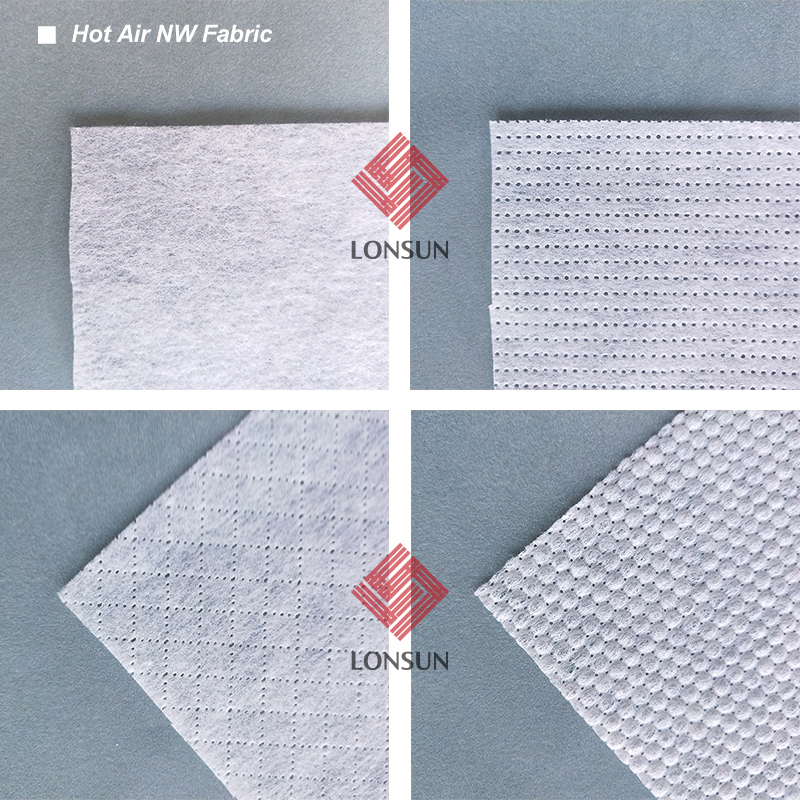
Through-air thermal bonding is a critical solution for hypoallergenic top sheets. We commonly call this technology Hot Air Nonwoven. During this process, heated air passes directly through the fiber web. This melts the bicomponent fibers slightly. They bond at their intersection points. The process uses no chemical adhesives. Therefore, the resulting fabric remains incredibly pure.
The mechanism behind its success lies in its structure. The hot air process creates a lofty, porous fabric. This loft reduces physical friction against the body. Furthermore, the high porosity stops moisture entrapment. Moisture entrapment and friction are two primary catalysts for microbial growth. They directly cause severe skin irritation. By minimizing both, this material dramatically improves skin health.
Nonwoven Technologies Comparison Chart
Technology Type | Bonding Method | Chemical Residue Risk | Loft and Softness | Skin Irritation Potential |
|---|---|---|---|---|
Chemical Bonding | Adhesive resins | High | Low to Medium | High |
Spunlace (Hydroentangled) | Water pressure | Zero | High | Low |
Through-Air (Hot Air) | Heated air flow | Zero | Very High | Very Low |
Selecting a supplier requires verifiable safety data. You must demand compliance strictly aligned to ISO 10993 standards. This framework dictates the biological evaluation of medical devices. Specifically, you need data on cytotoxicity, sensitization, and irritation. Cytotoxicity testing ensures the material does not kill skin cells. Sensitization testing guarantees it will not trigger an allergic immune response.
You must evaluate the supplier’s reliance on independent clinical testing. Do not accept internal estimates or theoretical data. Third-party testing provides unbiased validation. Request a Human Repeat Insult Patch Test (HRIPT) report. This test proves the material is safe for continuous human contact. A reliable supplier will readily provide these dermatological reports.
Hypoallergenic processing often impacts a material's fluid handling capabilities. You must assess how it affects hydrophilicity or hydrophobicity. Some suppliers eliminate harsh surfactants to improve skin safety. However, this elimination can lead to fluid pooling on the surface. Fluid pooling destroys comfort and causes leakage. You must avoid this scenario entirely.
Engineers must ensure the lack of surfactants does not cause rewet issues. Rewet happens when absorbed fluid presses back against the skin. A high-quality supplier balances safety and performance. They use safe, skin-friendly topical treatments. These treatments guide fluid into the absorbent core quickly. This keeps the user dry while preventing allergic reactions.
Traceability is critical for maintaining hypoallergenic claims. You must trace raw polymers and staple fibers back to their origins. Contaminated resin will ruin the final nonwoven product. Ask your supplier about their fiber sourcing protocols. Can they guarantee the purity of the incoming raw materials?
Furthermore, evaluate their facility standards. Can the supplier maintain consistent lot-to-lot purity? Cross-contamination in the facility is a severe risk. If they run standard materials on the same line, contamination happens. Dust and residual chemicals can transfer to the hypoallergenic batch. Strict clean-down procedures are mandatory.
Key Steps for Auditing Supply Chain Integrity:
Review the supplier's raw material sourcing logs.
Verify the physical separation of production lines.
Audit their machine cleaning and changeover protocols.
Request continuous quality control charts for recent batches.
Check their protocols for isolating non-conforming materials.
Your materials must align closely with global public health standards. These standards parallel baseline hygienic expectations set by the CDC and WHO. These principles apply directly to manufacturing environments. Expect your suppliers to operate Cleanroom production facilities. Good Manufacturing Practice (GMP) compliance is non-negotiable. GMP ensures products are consistently produced and controlled according to quality standards.
You must shortlist suppliers capable of meeting major global certifications. OEKO-TEX Standard 100 is highly recommended. It tests for harmful substances in textiles. If you sell in the US, ensure FDA compliance for medical devices. In Europe, REACH compliance is strictly required. REACH protects human health from risks posed by chemicals. Meeting these certifications proves your commitment to safety.
Marketing claims must rely on evidence-oriented documentation. You must secure a Certificate of Analysis (COA) for every batch. The COA proves the material meets your exact specifications. Specifically, it must prove the absence of optical brighteners. It must also show zero heavy metals and zero residual pesticides. These contaminants are severe skin sensitizers. Documenting their absence protects your company from liability.
Upgrading your components introduces significant manufacturing challenges. High-loft materials require adjustments on existing converting lines. Sanitary Napkin Materials like through-air nonwovens are bulky. You will likely need to adjust web tension control. Improper tension causes the material to stretch or break. Additionally, cutting dies might need recalibration. Dull dies will crush the lofty fibers instead of cutting them cleanly.
Adhesive compatibility is another major implementation risk. Hypoallergenic substrates often interact differently with standard construction glues. The lack of surface chemicals changes how the adhesive bonds. This creates a high risk of delamination. Delamination means the pad falls apart during use. You must thoroughly stress-test your hot melt adhesives.
Rollout Action Plan:
Conduct a lab-scale adhesive peel strength test.
Run a slow-speed trial on the primary converting line.
Adjust web tension settings to accommodate higher material loft.
Calibrate rotary cutting dies to prevent fiber crushing.
Perform an accelerated aging test on the finished product.
Finally, we must address cost and margin realities. Certified safe materials carry a premium cost. You must transparently model this cost increase. Compare it against the projected increase in customer lifetime value. Consumers pay more for guaranteed safety. Irritation-free products create extreme brand loyalty. This loyalty reduces churn and justifies a higher retail pricing power. Ultimately, the long-term revenue outweighs the initial material cost.
Transitioning to skin-safe materials is a mandatory evolution today. Competitive feminine hygiene brands cannot survive without them. This evolution requires rigorous vetting of various nonwoven technologies. You cannot blindly trust generic supplier promises. You must dig into the chemical makeup and structural engineering of the fabric.
Your shortlisting logic must remain strict and objective. Prioritize material partners offering transparent biocompatibility data. Demand consistent scalability and strict contamination controls. Look for specialized expertise in thermal bonding techniques. Suppliers mastering through-air bonding generally provide the best top sheet solutions.
Your next steps should focus on technical validation. Request a comprehensive technical data sheet immediately. Demand proof of third-party dermatological testing. Once satisfied with the data, schedule pilot line trials. Testing the material on your actual machines is the only way to ensure commercial viability.
A: Organic refers entirely to agricultural sourcing. It means the cotton or fiber grew without synthetic pesticides. Hypoallergenic refers to the biological response. It guarantees the final material lacks chemical sensitizers and will not trigger allergic reactions. An organic material can still cause irritation if processed with harsh chemicals. Conversely, a synthetic hypoallergenic material is engineered specifically to prevent any skin irritation.
A: It relies on a chemical-binder-free thermal bonding process. Heated air melts the fibers together naturally. This completely eliminates irritating adhesive residues. Furthermore, the process creates a highly porous, lofty structure. This loft reduces physical friction against the skin and prevents trapped moisture, keeping the user dry and comfortable.
A: Manufacturers must use specific ISO 10993 testing protocols. These global standards evaluate medical devices for cytotoxicity and skin sensitization. Additionally, reputable suppliers conduct repeated patch tests. The Human Repeat Insult Patch Test (HRIPT) is the gold standard. It involves testing the material repeatedly on human skin to ensure no delayed allergic reactions occur.
A: It can, if not engineered correctly. Eliminating harsh chemical surfactants might temporarily reduce the top sheet's hydrophilicity. Fluid could pool on the surface. Manufacturers solve this by using safe, skin-friendly treatments or mechanically altering the fiber shape. This ensures the top sheet rapidly transfers fluid into the underlying absorbent core without causing irritation.


