Home
Home | About Us | Advantages | Blogs | Contact Us


- All
- Product Name
- Product Keyword
- Product Model
- Product Summary
- Product Description
- Multi Field Search
Views: 0 Author: Site Editor Publish Time: 2026-09-06 Origin: Site


High-performance diaper manufacturing hinges on balancing fluid management, wearer comfort, and unit economics. When product developers and B2B buyers design premium hygiene items, selecting the right internal architecture represents your highest-stakes technical decision. You cannot afford to guess. The hygiene market demands exceptional performance alongside strict cost efficiency. However, a common misconception exists across the industry. Many professionals mistakenly view the absorbent core and superabsorbent polymers as competing technologies. We must clarify this confusion immediately. Superabsorbent polymer is simply a highly active ingredient functioning inside a broader core matrix. It never operates entirely alone. Our purpose here is to provide a transparent, engineering-focused framework. You will discover how to evaluate various configuration methods accurately. We will help you support confident supplier shortlisting and precise product specification. Evaluating these configurations objectively protects your brand reputation and ensures consistent field performance.
The absorbent core is a multi-layered system (typically including fluff pulp, ADL, and SAP); SAP (Superabsorbent Polymer) is the specific chemical compound responsible for fluid retention.
Moving toward an ultra thin diaper core requires a higher SAP-to-fluff ratio, which demands specialized adhesives and structural engineering to prevent gel blocking and sagging.
Performance evaluation should be based on verifiable metrics: Acquisition Time, Retention Under Load (RUL), and Rewet Rate, rather than marketing claims.
Material compliance and supply chain scalability are just as critical as raw absorbency when scaling commercial production.
We must treat the inner structure of hygiene products as a precisely engineered system. Evaluating your diaper core material requires dissecting its anatomy from top to bottom. This systematic approach ensures optimal fluid retention under dynamic physical conditions. Let us break down the standard layers you will encounter during product development.
Acquisition Distribution Layer (ADL): This gateway layer acts rapidly. It accepts sudden fluid surges and distributes them across a wider surface area. Without an effective ADL, liquid overwhelms the localized impact zone.
The Structural Matrix (Fluff Pulp/Non-wovens): This physical scaffolding holds active materials securely in place. It provides crucial initial capillary action to pull moisture downward. This layer dictates overall structural integrity during physical movement.
Superabsorbent Polymers (SAP): These cross-linked polymers chemically bind incoming fluids. They transition from dry granules into a stable gel matrix. They provide the ultimate liquid locking mechanism.
You cannot expect SAP to function efficiently in isolation. It relies on synergy. An engineered matrix distributes fluid evenly across the entire pad. Without this structural support, liquid pools in concentrated areas. Proper layering guarantees maximum absorption and prevents catastrophic leaks. The scaffolding keeps the granular particles separated just enough to allow continuous fluid pathways.
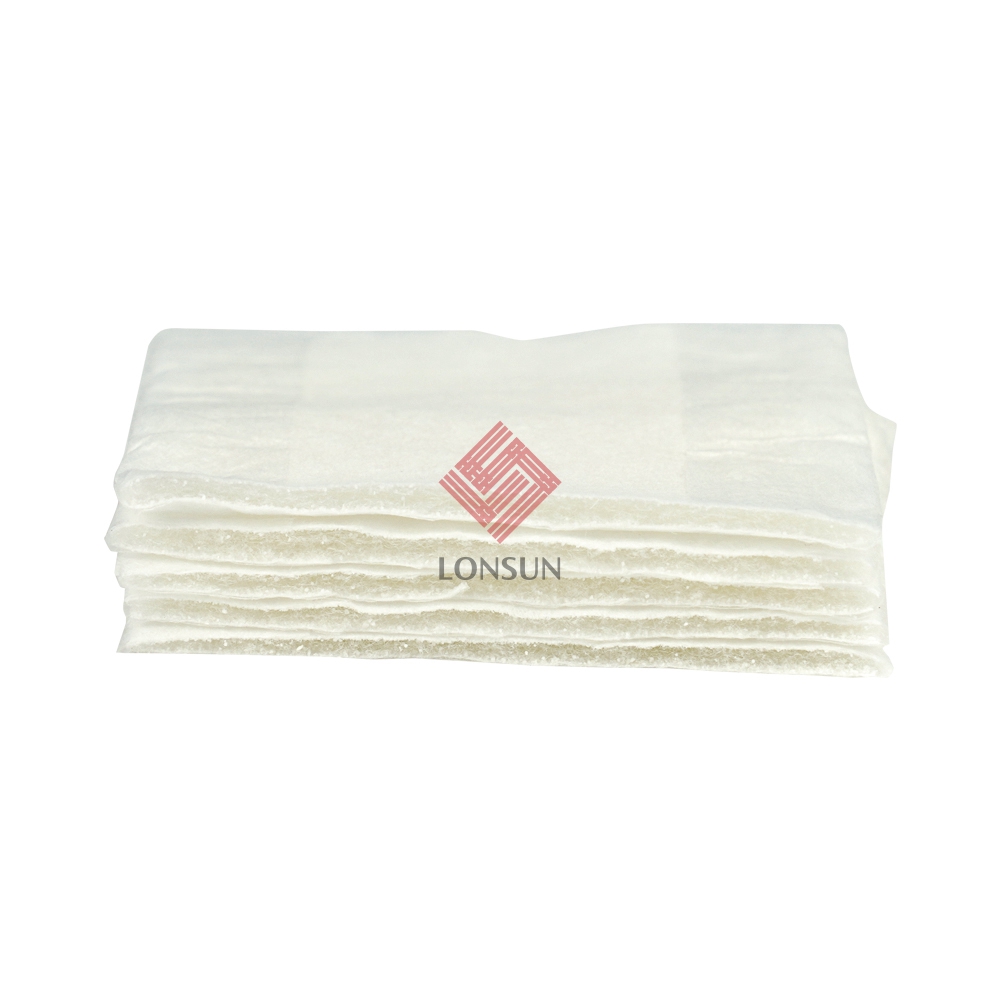
Engineers constantly balance bulk against performance. Evaluating a SAP core versus a fluff-heavy alternative highlights distinct trade-offs. Each configuration serves specific market segments differently. You must understand the physical limitations of both approaches.
Traditional fluff-heavy cores represent regular absorbency standards. They rely on a high ratio of wood pulp to SAP. This mechanism provides excellent initial fluid wicking. Manufacturers find them incredibly cost-effective. They also remain structurally stable during high-speed production runs. However, significant downsides exist. These traditional pads feel bulky. They increase shipping costs due to excessive packaging volumes. They also face a higher risk of physical degradation. Once wet, the pulp tends to clump and separate, causing uncomfortable sagging for the wearer.
Conversely, an ultra thin diaper core takes a modern, fluffless approach. It features dense SAP concentrations bonded by advanced adhesives or specialized non-wovens. This mechanism delivers superior discretion and exceptional fluid lock-in. It drastically reduces packaging and shipping volumes, optimizing your logistics. Despite these distinct pros, it presents formidable manufacturing challenges. You must apply precise adhesive networks. Poor adhesive application causes "gel blocking." In this scenario, outer SAP swells instantly and blocks fluid from reaching inner particles. Manufacturing tolerances remain unforgiving. You need highly specialized equipment to achieve consistent product results.
Table 1: Architectural Comparison of Diaper Cores
Feature | Traditional Fluff-Heavy Core | Ultra-Thin SAP Core |
|---|---|---|
Primary Mechanism | High wood pulp ratio | Dense SAP concentration |
Structural Binding | Mechanical interlocking | Advanced adhesives / non-wovens |
Key Advantage | Excellent initial wicking, low cost | Superior discretion, high fluid lock-in |
Major Risk | Wet clumping, excessive bulk | Gel blocking, strict tolerances |
Understanding how SAP actually works requires a quick look at osmotic pressure. Granular SAP absorbs liquid actively through hydrogen bonding. Sodium polyacrylate attracts water molecules instantly upon contact. The polymer chains expand rapidly. They transform from a dry powder into a stable, tightly bound hydrogel. This chemical reaction permanently traps moisture away from human skin. It stops liquid from returning to the surface even under heavy pressure.
Consumer skepticism frequently targets synthetic chemicals. You must address safety and compliance truths directly. Commercial sodium polyacrylate features an extensively documented toxicological safety profile. The FDA and EPA provide clear baseline data confirming its chemical inertia. Furthermore, premium manufacturers conduct rigorous dermatological testing. They utilize recognized ISO standards for skin sensitization. This testing proves the material remains non-sensitizing, even in high-moisture environments. It does not cause allergic reactions.
We also need to consider the broader environmental context. Current realities regarding SAP biodegradability demand realistic expectations. Commercial standards rely heavily on synthetic polymers for maximum performance. Bio-based SAP alternatives exist today. However, they currently struggle to match the absorption speed and retention capacity of traditional synthetics. Transitioning to green alternatives requires careful balancing. You must weigh sustainability goals against raw performance needs. Complete biodegradability remains an ongoing industry challenge.
Specifying a reliable absorbent core requires verifiable testing protocols. You should base your final decisions on objective performance data rather than marketing claims. Subjective feel does not guarantee technical success. Implement this four-step evaluation framework developed from EDANA industry guidelines to ensure product reliability.
Speed of Acquisition and Rewet Values: Measure how fast the material absorbs fluid in seconds. Next, calculate how many grams of fluid return to the surface under pressure. Low rewet directly equates to lower diaper rash risks. It drives higher perceived consumer quality and brand trust.
Retention Capacity Under Load (RUL): Free-swell capacity serves as a mere vanity metric. You must focus on RUL instead. This metric reveals how well the core holds liquid when a wearer actually sits, walks, or moves. High RUL prevents compression leaks effectively.
Pad Integrity (Wet and Dry): Evaluate resistance to tearing or sagging. Even the most advanced design fails if it disintegrates during active daily wear. Active physical testing reveals hidden structural flaws. A broken pad matrix leads to immediate leakage.
Consistency Across Batches: Validate automated optical inspection protocols. Consistent SAP distribution prevents localized failures. Your manufacturer must demonstrate robust quality control during every production run. Inconsistent distribution ruins the carefully planned material synergy.
A highly engineered absorbent layer demands precise manufacturing execution. The inner materials must integrate seamlessly. They need perfect compatibility alongside top-sheets, back-sheets, and construction adhesives. Hot-melt glues play a critical role here. If the adhesive chemistry clashes with the SAP properties, the bond fails. Mismatched materials compromise the entire product structure. You risk massive product recalls if layers delaminate.
Machinery constraints dictate production success. High-SAP configurations require specific equipment capabilities. Your supplier needs advanced SAP applicators and specialized core forming drums. Standard fluff machines cannot handle fluffless designs accurately. You must ask if the supplier can scale this architecture without generating high defect rates. Equipment limitations often bottleneck commercial scaling efforts.
Risk mitigation protects your upfront investment. You should confidently request and evaluate detailed supplier specification sheets. Never skip essential verification steps. Demand third-party lab testing for RUL and Rewet rates. You must secure these independent results before committing to any pilot run. This diligence prevents costly manufacturing errors downstream. It holds suppliers accountable to their stated technical claims.
Choosing between a traditional framework and an ultra-thin architecture requires careful deliberation. It is not about finding a single perfect diaper concept. Instead, it is about aligning material science perfectly against your target market's demands. You must balance unit cost, wearer comfort, and long-term reliability. A premium brand requires a distinctly different configuration than a budget-friendly alternative.
Your next steps require proactive validation. We encourage you to request comprehensive technical data sheets (TDS) immediately. Analyze the RUL and rewet metrics closely. Order pilot samples for rigorous physical testing in your own facility. Finally, audit your chosen supplier's manufacturing consistency comprehensively before finalizing any binding contracts. Strong partnerships rely on verified technical competence.
A: The core represents the complete structural system. It includes fluff pulp, distribution layers, and stabilizing adhesives. Conversely, SAP is the specific chemical powder embedded within that overall system. SAP acts as the active engine that physically traps the liquid.
A: No. Thickness is primarily dictated by bulky fluff pulp. Ultra-thin designs utilize a much higher ratio of SAP. Because SAP absorbs exponentially more than its own weight, these slim designs offer equal or superior absorbency within a significantly smaller physical profile.
A: Gel blocking occurs when surface SAP swells too rapidly. This swelling blocks incoming fluid from reaching deeper layers. Engineers prevent this issue by integrating a superior ADL. They also optimize the physical spacing and distribution of SAP particles throughout the structural matrix.
A: Yes. Commercial sodium polyacrylate undergoes rigorous toxicological testing. It remains chemically inert, non-toxic, and highly stable. International health standards heavily regulate these hygiene products to ensure they cause no sensitization during prolonged skin contact.


