Home
Home | About Us | Advantages | Blogs | Contact Us


- All
- Product Name
- Product Keyword
- Product Model
- Product Summary
- Product Description
- Multi Field Search
Views: 0 Author: Site Editor Publish Time: 2026-09-03 Origin: Site


Diaper manufacturing has evolved rapidly over recent decades. We have transitioned from bulky, cellulose-heavy designs to ultra-thin, high-performance profiles. Formulators face constant pressure today. They must balance raw material costs, fluid retention, and strict dermatological safety standards. Doing this successfully ensures a superior consumer experience. Procurement teams also struggle. They need to find dependable suppliers to maintain production continuity and avoid expensive line stoppages.
This article demystifies the chemical and structural mechanics of these advanced materials. We explain how they synergize effectively alongside other foundational components. You will discover a robust framework for evaluating and sourcing this critical technology. By understanding these technical dynamics, you can engineer safer, more effective products for your target market. Readers will gain actionable knowledge to improve product design, strengthen supply chain resilience, and achieve validated commercial performance claims.
Performance is Ratio-Dependent: Optimizing the ratio of SAP to fluff pulp is critical to maximizing retention while preventing structural failures like gel blocking.
Metrics Matter: Consumer claims like "12-hour dryness" require precise validation of technical specifications, specifically Absorbency Under Load (AUL) and Centrifuge Retention Capacity (CRC).
Safety & Compliance: High-quality SAP must meet rigorous thresholds for low residual monomers and pass stringent dermatological testing to be viable as a baby diaper raw material.
Sourcing Risk: Supplier evaluation must extend beyond price-per-ton to include batch-to-batch consistency, particle size distribution, and supply chain scalability.
Manufacturers rely heavily on complex chemistry to manage fluid effectively. The foundational framework relies on sodium polyacrylate networks. This compound begins as acrylic acid. Chemical processing neutralizes it using sodium hydroxide. This reaction forms a long polymer chain. Water naturally migrates toward the sodium ions inside the polymer network. This process happens through simple osmosis.
However, absorbing water is only half the battle. The material must trap the liquid rather than dissolve into a useless liquid mess. Formulators introduce chemical cross-linking agents during manufacturing to achieve this. These cross-linkers tie the long polymer chains together. They form a robust, three-dimensional network. This specific structure enables a super absorbent polymer to lock moisture away permanently. Once liquid enters the network, it turns into a stable hydrogel.
Engineers must carefully differentiate between free swell capacity and real-world retention. Free swell capacity measures fluid intake inside a beaker. You drop the powder into saline solution and wait. The powder swells massively. The results often look spectacular on a laboratory bench. However, babies do not wear diapers inside a beaker. They sit, crawl, and tumble.
This reality exposes the myth of "infinite" absorbency. Many marketing campaigns suggest these crystals can hold endless amounts of liquid. Theoretical capacity means very little under mechanical pressure. If the cross-linking density is too low, the swollen gel will easily rupture under a baby's weight. The liquid then leaks back onto the skin. Engineers must optimize cross-link density carefully. Higher cross-linking lowers total capacity but significantly improves strength under pressure. You must balance these competing chemical properties to create a reliable product.
Modern diapers function as a unified, multi-layered system. You cannot evaluate any single component in isolation. A proper product teardown reveals three essential layers working together. First, liquid passes through the topsheet into the acquisition distribution layer (ADL). The ADL quickly moves the liquid away from the baby's skin. It then spreads this moisture longitudinally across the entire diaper.
Below the ADL sits the primary engine of the diaper. This layer combines fluff (wood) pulp and specialized powders. They form the primary absorbent core. The synergy between these two materials dictates overall performance.
Wood pulp provides rapid capillary wicking (speed): Cellulose fibers act like tiny microscopic straws. They grab liquid instantly upon contact. They pull it away from the surface before it can pool.
Specialized powders provide permanent fluid lock-in (capacity): The chemical hydrogel takes over once the pulp distributes the liquid. It pulls the moisture out of the cellulose fibers. It locks the liquid away tightly so it cannot escape.
Understanding this synergy helps avoid major implementation risks. Misaligning the ratio of pulp to powder creates disastrous consequences. Gel blocking remains the most common structural failure. This happens when the hydrogel particles swell too rapidly upon initial contact. They expand and physically fuse together. This creates an impermeable wall of gel.
When gel blocking occurs, subsequent liquid cannot penetrate the barrier. The fluid pools on top of the barrier. It never reaches the rest of the diaper absorbent material. As a result, the diaper leaks out the sides immediately. Formulators prevent gel blocking by optimizing the pulp ratio. Proper spacing between hydrogel particles ensures continuous fluid pathways. You must design the core matrix to remain open and permeable, even after multiple insult loads.
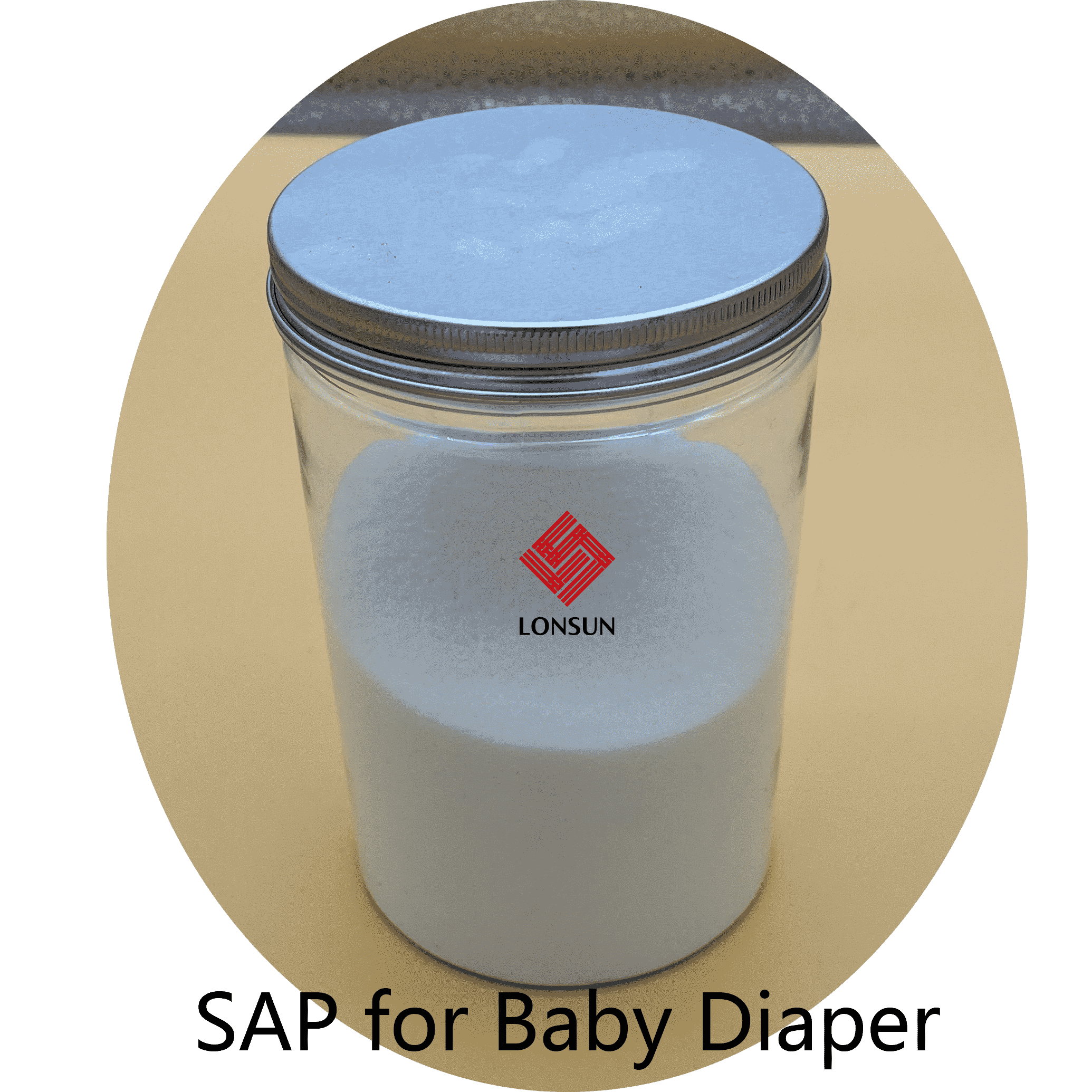
Consumer marketing relies heavily on catchy phrases. You often see boxes promising "12-hour dryness" or "overnight protection." Manufacturers must back these claims using rigorous laboratory data. They rely on standard technical specifications governed by organizations like EDANA (European Disposables and Nonwovens Association).
Centrifuge Retention Capacity (CRC) serves as a baseline metric. Laboratory technicians saturate the SAP samples completely in saline solution. They place the saturated material inside a centrifuge. The machine spins rapidly to extract all unbound surface water. The remaining weight determines the CRC. This metric tells you exactly how much fluid the network retains after extreme extraction. It represents the baseline holding power of the hydrogel.
However, CRC alone does not guarantee real-world success. Absorbency Under Load (AUL) remains the most critical metric for diaper formulation. AUL tests simulate the exact pressure of a sitting baby. Technicians place a heavy weight directly on top of the dry powder. They then introduce saline solution from below. The material must lift the weight as it absorbs the fluid. If the gel lacks sufficient strength, the weight crushes the particles. The fluid stays outside the network.
Achieving true "12-hour dryness" requires optimizing both metrics simultaneously. High AUL prevents rewetting during the night. Rewetting happens when pressure forces trapped moisture back out toward the skin. Prolonged moisture exposure causes skin maceration. Macerated skin breaks down easily and develops painful diaper rash. By maximizing AUL, you keep the skin environment completely dry. This biological outcome directly validates your marketing promises to anxious parents.
Metric Type | Testing Method | Primary Function | Real-World Impact |
|---|---|---|---|
Centrifuge Retention Capacity (CRC) | Saturation followed by rapid centrifugal spinning | Measures total permanent fluid lock-in capability | Determines the maximum volume a diaper can hold before leaking |
Absorbency Under Load (AUL) | Fluid introduction against mechanical surface pressure | Measures gel strength and anti-crush resistance | Prevents overnight leaks when the infant sits or rolls over |
Consumers frequently express concern about chemical additives in infant care products. They see small, translucent gel beads on their baby's skin and worry about toxicity. Manufacturers must address consumer and regulatory skepticism head-on. Relying on scientific evidence is the only path forward.
The evidence-based reality confirms high safety margins. Sodium polyacrylate remains inherently non-toxic. It does not irritate healthy skin mechanically. It does not cause allergic sensitization. Decades of dermatological testing support these conclusions. The material is chemically inert once cross-linked.
However, the manufacturing process requires strict oversight. Residual monomer thresholds serve as the ultimate quality control metric. Complete polymerization rarely happens during factory production. Trace amounts of unreacted acrylic acid occasionally remain in the final powder. These residual monomers can irritate sensitive skin if levels climb too high. Consequently, any viable baby diaper raw material must undergo rigorous screening. Top-tier suppliers guarantee residual monomer levels well below 400 parts per million (ppm). Many premium suppliers push this number below 200 ppm.
Manufacturers must view quality through strict regulatory lenses. International chemical safety frameworks dictate market access. Products entering Europe must comply fully with REACH regulations. These laws restrict harmful chemical substances strictly. Additionally, obtaining OEKO-TEX STANDARD 100 certification provides an excellent consumer trust signal. This independent certification proves the absence of harmful substances. Passing these stringent dermatological tests removes compliance roadblocks. It also empowers your marketing teams to promote dermatological safety confidently.
Purchasing teams often make a critical mistake. They evaluate raw materials solely based on the price-per-ton. This narrow focus creates massive production headaches. Strategic sourcing requires a broader evaluation framework to ensure continuous, high-quality manufacturing.
Particle Size Distribution (PSD) requires immediate attention during supplier audits. A shipment should contain a specific ratio of particle sizes, forming a consistent bell curve. If a supplier delivers too many fine dust particles, your manufacturing line will suffer. Fine particles float into machinery gears and cause line jams. They also migrate through the diaper topsheet easily. This migration leads to consumer complaints about finding "gel on skin." Conversely, overly coarse particles feel gritty and uncomfortable to the user. They also distribute unevenly across the fluff matrix.
Batch-to-batch consistency represents another hidden danger. Cheap powders fluctuate wildly between shipments. One batch might feature excellent AUL, while the next fails basic CRC tests. Inconsistent materials force factory operators to recalibrate production machines constantly. This downtime destroys operational efficiency. High defect rates quickly erase any upfront material savings.
Procurement must also evaluate scalability and supply chain resilience. Acrylic acid serves as the primary base ingredient. You must verify your supplier's access to stable acrylic acid sources. If global chemical shortages occur, a weak supplier will cut your allocation. A strong partner maintains robust production capacity and geographical redundancies. They protect your production lines during global disruptions.
Use this practical shortlisting logic before committing to commercial volumes:
Request Comprehensive Technical Data Sheets (TDS): Verify CRC, AUL, and residual monomer levels directly on paper first.
Order Standard Sampling Kits: Perform internal beaker tests to verify the TDS claims independently.
Execute Third-Party Lab Tests: Send samples out for unbiased dermatological and chemical compliance screening.
Conduct Small-Scale Pilot Line Runs: Run the powder through your actual manufacturing equipment to check for line jams and integration issues.
Lock In Commercial Agreements: Structure contracts that penalize extreme batch-to-batch variance.
Advanced chemical engineering drives the modern hygiene industry. These specialized cross-linked hydrogels are not generic commodities. They are highly engineered chemical components. Their specific formulation dictates the ultimate success or failure of your final product. Ignoring technical specifications leads directly to product leaks, line jams, and brand damage.
Strategic alignment across your entire organization is vital. Procurement, engineering, and marketing teams must collaborate closely. Investing in correctly specified materials reduces overall material weight significantly. Thinner diapers lower your shipping costs and reduce warehouse storage requirements. Most importantly, reliable fluid retention eliminates diaper rash. This outcome directly reduces consumer churn and builds deep brand loyalty.
Take action immediately to audit your current material performance. Request updated technical data sheets from your suppliers today. Order fresh sampling kits to compare alternative formulations. We highly recommend scheduling a consultation with a polymer integration specialist. They can help you optimize your core ratios and elevate your product to premium status.
A: Contact is completely safe and non-toxic. The material is chemically inert. The crystals might feel slightly strange or slippery, but they do not cause chemical burns or allergic reactions. Any minor irritation would be purely mechanical friction. Simply wipe the crystals away gently with a damp cloth.
A: Yes, but the trade-offs are severe. You must rely entirely on cellulose fluff pulp for absorption. This requires a massive amount of material. The resulting diaper becomes incredibly bulky and uncomfortable. Furthermore, pulp releases liquid under pressure. Leaks become much more frequent, and production costs ultimately rise due to shipping heavy products.
A: Standard hydrogel powder remains stable for roughly two to three years. However, proper storage conditions are absolutely critical. The powder is highly sensitive to ambient moisture. You must store it in a dry, climate-controlled warehouse. Always keep the original packaging tightly sealed to prevent premature clumping and degradation.
A: The market is developing rapidly, but bio-alternatives face challenges. Some starch-based options exist today. However, they currently suffer from notable performance gaps, particularly regarding AUL. They also carry significant cost multiples. While excellent for niche eco-brands, bio-based options are not yet fully ready to replace synthetic options in high-speed, mass-market production lines.


