Home
Home | About Us | Advantages | Blogs | Contact Us


- All
- Product Name
- Product Keyword
- Product Model
- Product Summary
- Product Description
- Multi Field Search
Views: 0 Author: Site Editor Publish Time: 2026-09-12 Origin: Site


Procurement teams in the hygiene industry face a continuous balancing act. You must carefully weigh raw material costs against soaring consumer demand for premium products. Modern consumers expect highly skin-friendly, comfortable hygiene solutions. Choosing the right polymer barrier dictates market success. This article compares microporous breathable membranes against standard non-porous polyethylene. We evaluate them across material performance, manufacturing viability, and end-user health outcomes. Our primary objective is to provide developers an evidence-based framework. This will help you confidently specify the correct diaper backsheet for your converting lines. You will discover how specific extrusion technologies separate premium liners from budget alternatives. We also unpack critical laboratory metrics regulating moisture transfer. Ultimately, you will know exactly which barrier material aligns best for your brand.
Traditional non-porous films offer superior cost-efficiency and absolute liquid barriers but trap heat and moisture.
Breathable PE film utilizes microporous technology to release water vapor while maintaining a liquid barrier, directly reducing the risk of dermatitis.
The choice depends heavily on product tiering: premium hypoallergenic lines require breathable films, while economy tiers often rely on traditional waterproof film.
Transitioning to breathable materials requires evaluating production line tension controls and adhesive compatibility.
Engineers create traditional films using an extruded solid polyethylene structure. Manufacturers melt polymer resin and push it through a flat die. This forms a continuous, uniform sheet. It cools rapidly into a solid layer. This structure acts as a complete, non-porous barrier. It blocks both liquids and gases entirely. Fluids cannot pass through. Vapors cannot escape. The primary function here focuses on absolute leak prevention. Factories produce this standard waterproof film at the lowest possible cost. It requires fewer compounding additives. The extrusion lines run at very high speeds. Maintenance remains straightforward. Many legacy hygiene brands rely entirely on this dependable material structure.
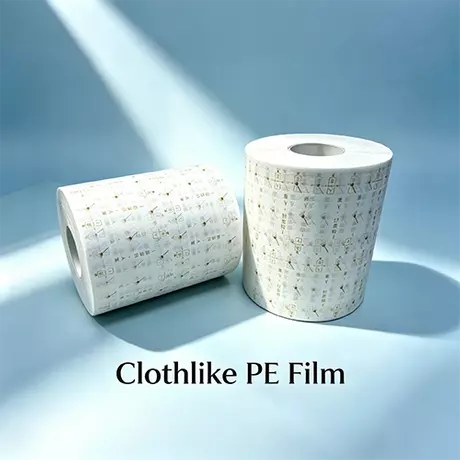
Breathable alternatives require a much more complex manufacturing process. Formulators compound the base polyethylene polymer using calcium carbonate (CaCO3) particles. Extruders form the initial film layer. Then, specialized machine direction orientation (MDO) rollers stretch the material. This stretching phase is critical. The polymer matrix pulls away from the rigid calcium carbonate particles. This microscopic separation creates millions of tiny pores (micropores) across the film.
These pores possess specific geometric properties. They are large enough for water vapor molecules to escape freely. However, they remain too small for liquid water droplets to pass. Surface tension prevents liquid penetration. The primary function shifts toward thermal and moisture regulation. Consumers enjoy cooler, drier skin environments. The barrier integrity remains strong against fluid leaks.
Engineers rely on rigorous laboratory testing to quantify permeability. The global standard measurement is the Water Vapor Transmission Rate (WVTR). Technicians usually test this using protocols like ASTM E96. WVTR measures how many grams of water vapor pass through one square meter of film over 24 hours. A high WVTR in breathable films translates directly to measurable benefits. It drastically reduces internal humidity within a diaper. Heat escapes naturally. Moisture evaporates into the surrounding air. We see skin temperature drop significantly. This creates a much more comfortable microclimate for the wearer.
Permeability must not compromise leak protection. Quality control teams evaluate liquid barrier strength using the Hydrostatic Pressure Test. A common standard is AATCC 127. This test applies increasing water pressure to one side of the film. Technicians record the exact pressure where water finally breaks through.
Product developers must address a known technical trade-off. Higher breathability can marginally lower hydrostatic resistance. Pores weaken the physical liquid barrier slightly compared to solid films. You must define acceptable baseline metrics for a standard diaper backsheet. The material must prevent strike-through under sudden pressure spikes. For example, the film must hold firm when a baby sits or falls down abruptly.
Performance Metric | Traditional Non-Porous Film | Breathable Microporous Film |
|---|---|---|
Structure Type | Solid Polyethylene | CaCO3 Compounded & Stretched |
Moisture Transmission (WVTR) | Virtually Zero | High (Often > 1500 g/m²/24h) |
Hydrostatic Pressure Resistance | Excellent (Maximized Barrier) | Good (Meets Baseline Standards) |
Internal Thermal Buildup | High | Low (Actively Vents Heat) |
Diaper rash remains a primary concern for parents globally. We must understand the exact mechanism of this dermatitis. Complete occlusion traps moisture against the skin. This over-hydration weakens the stratum corneum (the outer skin layer). The skin becomes macerated and highly fragile. Physical friction from the diaper pad then damages this weakened tissue. Urine and enzymes irritate the raw skin further. Breathable materials interrupt this cycle directly. They vent excess humidity. Skin remains dry, intact, and resilient against friction.
Brands leverage this dermatological data for market positioning. Breathable PE film easily justifies higher retail price points. It directly addresses intense parent concerns regarding infant skin health. Hypoallergenic claims rely heavily on moisture-wicking backsheets. Marketing teams highlight "breathability" as a core premium feature. Consumers willingly pay a premium for guaranteed comfort. They view these advanced materials as essential for daily skin protection.
This technology extends far beyond baby care. It is rapidly becoming the gold standard for high-end feminine care. Formulators use it extensively as a premium sanitary pad film. Menstrual pads require excellent thermal regulation. Breathable backsheets significantly improve daily wear comfort. They reduce thermal buildup during long hours of use. Adult incontinence products also adopt this technology. Older adults suffer from severe skin breakdown under occlusive materials. Micro-porous barriers offer life-changing comfort upgrades for these vulnerable demographics.
Switching materials requires careful operational planning. You must evaluate production line compatibility thoroughly. Tension control risks pose the biggest challenge. Manufacturers already stretch breathable films during the initial extrusion phase. This inherent stretching reduces their ultimate tensile strength. They become more susceptible to mechanical deformation. They can snap easily on older, high-speed converting lines. Plant managers must recalibrate tension zones across the entire machinery. Web handling systems require precise synchronization to prevent material breakage.
Converting lines rely on hot-melt adhesive (HMA) for structural bonding. You will notice distinct differences in adhesive behavior. Traditional films provide a smooth, solid surface. The adhesive sits perfectly on top. Porous surfaces behave differently. Hot-melt glue can penetrate the microscopic pores. If applied too heavily, adhesive might bleed through the film. This ruins the soft outer texture. Machine operators must adjust glue temperatures and spray patterns. They must ensure strong bonds without compromising the breathable pores.
Procurement teams must analyze the per-square-meter cost closely. You must acknowledge the premium pricing of porous films. The complex compounding process adds significant manufacturing expense. Sourcing ultra-fine calcium carbonate requires tight quality control. The secondary stretching processes (MDO) consume additional energy and time. You must also assess yield considerations on your converting floor. Because the film is delicate, roll-change frequency might increase. Scrap rates occasionally rise during initial machine calibration. However, this hygiene film commands a much higher retail margin, making the investment worthwhile for premium brands.
Certain product categories still benefit immensely from solid barriers. You should select standard non-porous films for specific applications:
Economy and value-tier baby diapers where retail price dictates consumer choice.
Basic adult incontinence pads where absolute leak prevention and tight budget constraints remain the sole priorities.
Pet training pads and medical bed underpads. Thermal regulation does not factor heavily into these end-uses.
These scenarios favor high-speed runability and rock-bottom material costs.
Premium consumer expectations demand advanced material solutions. You should specify breathable variants for the following product lines:
Mid-to-premium tier baby diapers competing strictly on comfort and infant skin health.
Hypoallergenic and "sensitive skin" marketed product lines requiring clinical backing.
Premium feminine care products focusing on active lifestyles and discreet comfort.
The initial material investment pays off through stronger brand loyalty and premium market positioning.
Many manufacturers adopt hybrid material strategies. You do not have to choose just one technology. Zone-breathable designs offer a clever compromise. They place breathable panels only in high-sweat zones. Alternatively, you can combine porous films alongside specific non-woven laminates. The non-woven layer adds necessary structural integrity. It protects the delicate microporous film from tearing during manufacturing. This textile-like composite delivers supreme softness. It balances manufacturing strength against premium consumer comfort perfectly.
Traditional films maximize cost-efficiency and provide absolute leak protection.
Breathable membranes vent moisture, cool the skin, and actively prevent dermatitis.
Upgrading barrier materials requires rigorous tension control audits on your converting lines.
Your final choice dictates your brand's market tier and retail price positioning.
In summary, you face a fundamental manufacturing trade-off. You must balance absolute cost-efficiency against premium comfort and marketability. Upgrading to breathable materials represents a major operational shift. It is not just a marketing decision. You must conduct comprehensive line capability assessments first. We encourage procurement teams to take immediate action. Request detailed material data sheets (TDS) from your suppliers. Ask for certified WVTR testing reports. Finally, order sample rolls to conduct live converting trials on your equipment.
A: No, it does not compromise standard leak protection. The micropores are meticulously engineered. They are large enough for vapor to escape but too small for liquid droplets. Surface tension prevents water from pushing through the pores. However, the film must stay within its designed hydrostatic pressure limits. Extreme physical pressure could force liquid through, but standard sitting or walking will not cause leaks.
A: Yes, converters frequently print custom designs on these films. They are fully compatible with standard flexographic printing processes. You must note some minor differences in ink adhesion. The porous surface can absorb ink differently than solid films. Printers usually adjust ink viscosity and drying temperatures. This ensures sharp, vibrant brand logos without bleeding into the micropores.
A: Yes, the industry is shifting toward sustainable alternatives. Manufacturers now offer polylactic acid (PLA) or other bio-based breathable films. They use similar compounding techniques to create micropores. However, current biodegradable options face severe limitations. They cost significantly more than standard polyethylene. Scalability remains low, and they often exhibit weaker tensile strength on fast converting lines.
A: Breathable films undergo severe stretching during the initial extrusion process. This stretching creates the necessary pores around the calcium carbonate particles. Consequently, the finished roll possesses reduced tensile strength compared to solid PE. When running on high-speed diaper lines, the film cannot absorb sudden tension spikes well. Poor tension control will cause the film to snap or deform.